
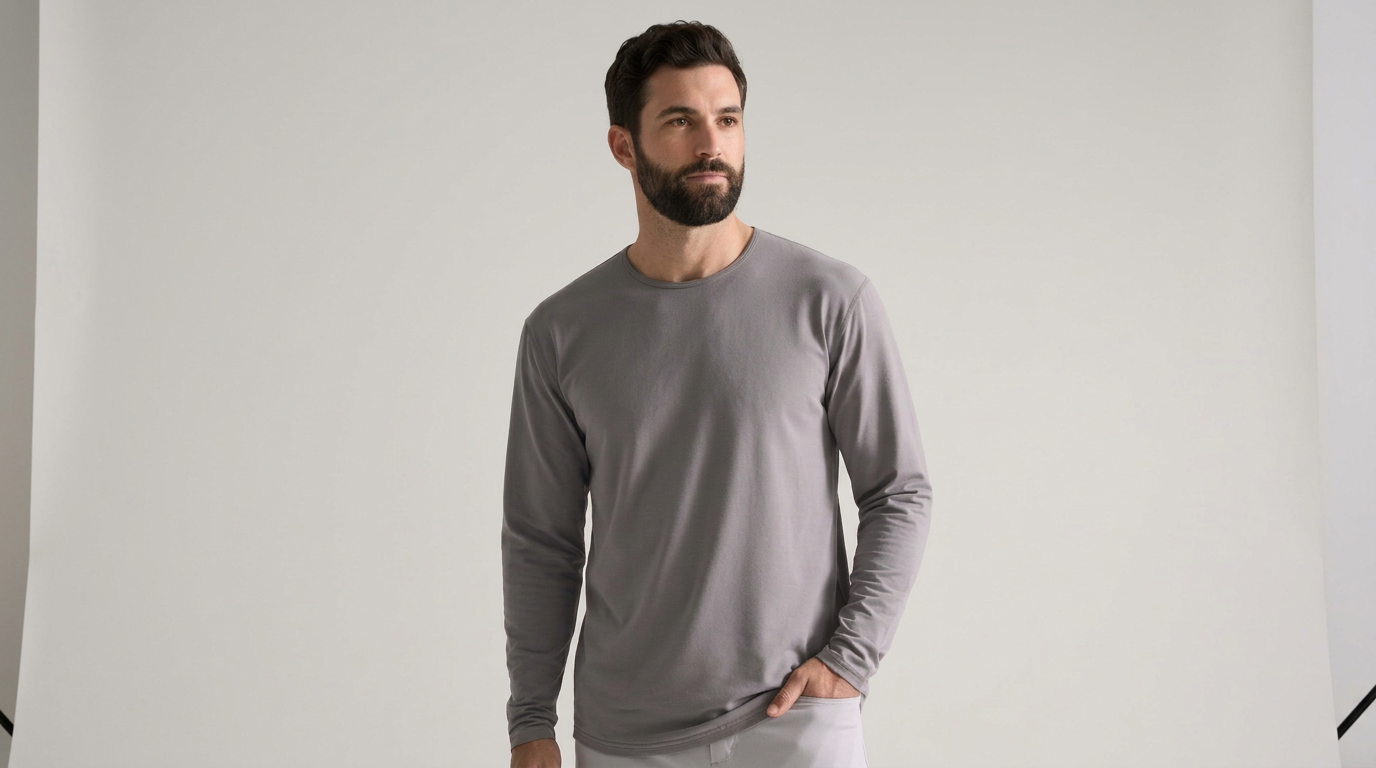
Are Long Sleeve T-Shirts Good for Layering in Winter? A Men’s Guide to Staying Warm Without Bulk
Yes, long sleeve T-shirts are excellent for layering in winter, particularly during mild to moderately cold weather.A comfortable, close-fitting long sleeve provides an additional layer of insulation beneath sweaters, hoodies and jackets without adding excessive bulk. For freezing temperatures or prolonged outdoor activity, however, a dedicated thermal base layer may provide better warmth and moisture management.
I've always preferred layering in winter over wearing one enormous jacket.
Part of that is comfort.
I don't like walking into a restaurant, office or coffee shop and immediately feeling overheated because everything I'm wearing is too heavy.
And part of it is appearance.
Bulky winter clothing can make even a well-built guy look shapeless.
That's why I like starting with a good long sleeve T-shirt.
It gives you an extra layer, keeps your outfit relatively streamlined and works on its own once you take your jacket off.
But not every long sleeve makes a good winter base layer.
The fabric, fit and weather conditions matter.
Here's how I'd approach it.
1. Why Long Sleeve T-Shirts Work Well for Winter Layering
The biggest advantage of a long sleeve T-shirt is versatility.
You can wear it underneath:
- A hoodie
- A crew-neck sweater
- A quarter-zip
- A flannel
- An overshirt
- A casual jacket
- A winter coat
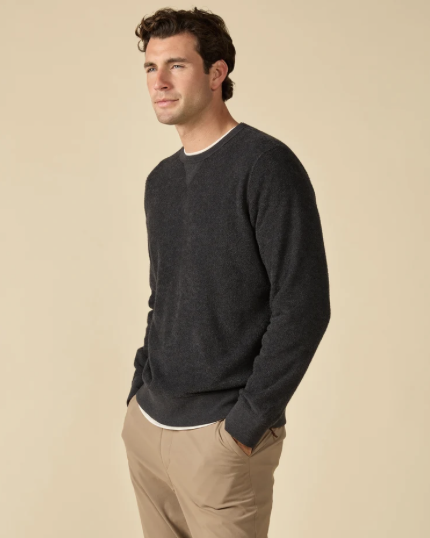
That makes it one of the easiest pieces to build a winter wardrobe around.
A lightweight long sleeve also helps create a comfortable layer of air between your skin and the clothing above it.
That can contribute to warmth without requiring a bulky shirt.
But there's an important distinction.
A regular long sleeve T-shirt is not automatically a technical thermal base layer.
For everyday winter activities, it may be all you need underneath a sweater or jacket.
For skiing, hiking in freezing temperatures or spending hours outdoors, I'd consider a purpose-built thermal layer instead.
2. Long Sleeve T-Shirt vs. Thermal Base Layer: What's the Difference?
This is where a lot of guys get confused.
A long sleeve T-shirt and a thermal base layer can look similar, but they're often designed for different purposes.
| Feature | Long Sleeve T-Shirt | Thermal Base Layer |
|---|---|---|
| Primary purpose | Everyday wear and layering | Temperature and moisture management |
| Fit | Athletic, slim or regular | Usually close-fitting |
| Thickness | Lightweight to medium | Varies by warmth rating |
| Everyday appearance | Designed to wear alone | Often designed for layering |
| Best use | Mild winter, casual outfits | Cold-weather activity |
| Versatility | High | More specialized |
For everyday winter clothing, I prefer a long sleeve that looks good by itself.
That way, I don't have to keep my sweater or jacket on all day.
But if I'm heading somewhere genuinely cold and plan to spend hours outside, I prioritize technical performance over appearance.
3. How Should a Long Sleeve Fit Under Winter Clothes?
This is probably the most important part.
I don't want a base layer that's excessively baggy.
Extra fabric can bunch up underneath a sweater or jacket.
That makes the outfit uncomfortable and can create an unnecessarily bulky silhouette.
But I also don't want a shirt so tight that I can barely move.

The ideal fit follows the body comfortably.
What I Look for in a Winter Layering Shirt
Shoulders: Enough room to move naturally without excessive fabric.
Chest: A clean fit that doesn't pull when reaching forward.
Arms: Sleeves that follow the arms without restricting elbow movement.
Waist: Minimal bunching beneath outer layers.
Length: Enough coverage to stay in place when moving.
This is where an athletic-fit shirt becomes useful.
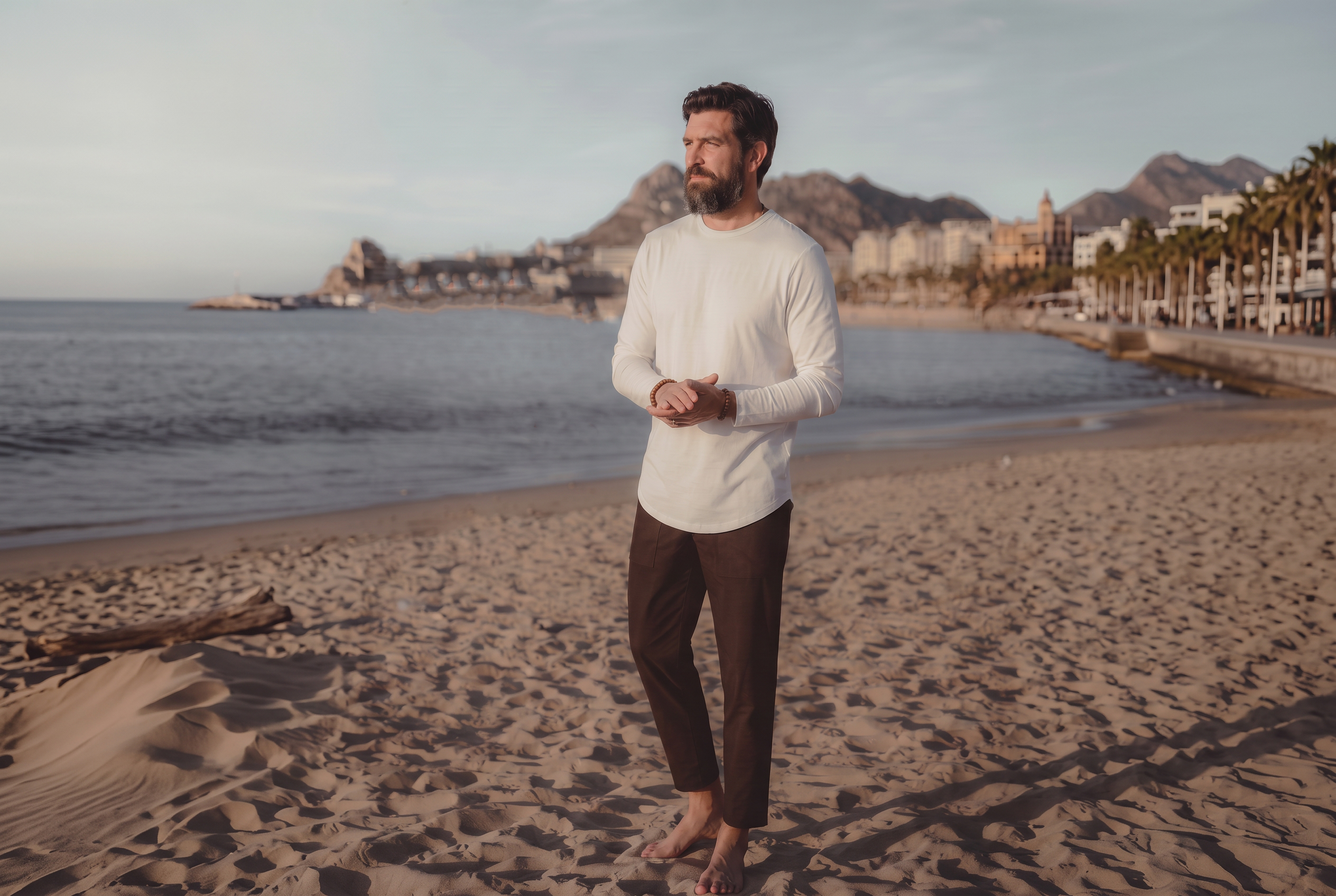
The Ten/10 Long Sleeve Curved Hem Tee is designed around a cleaner athletic silhouette, making it a practical option for everyday layering.
For men with broader shoulders and a narrower waist, that type of cut can help reduce unnecessary fabric beneath jackets and sweaters.
4. What Fabric Is Best for a Winter Long Sleeve?
The right fabric depends on how cold it is and what you're doing.
Cotton
Cotton can feel soft and comfortable for everyday wear.
It's perfectly reasonable for casual winter outfits when you're mostly indoors or moving between heated spaces.
However, cotton absorbs moisture and can dry slowly.
That makes it less suitable for strenuous activity in cold conditions, particularly when sweat could leave the fabric damp against your skin.
Polyester Blends
Polyester-based fabrics can be engineered to transport moisture and dry relatively quickly.
That can be useful when you're moving between cold outdoor conditions and warm indoor environments.
Stretch blends can also make layering more comfortable.
Merino Wool
Merino wool is a popular choice for cold-weather base layers.
It can help manage moisture and provide insulation, including under some damp conditions.
It's especially useful for travel and outdoor activities, although individual garments vary in weight and performance.
Nylon and Stretch Blends
Nylon blends can provide durability, smoothness and flexibility.
They're useful for fitted clothing that needs to move comfortably beneath other garments.
My preference: For casual winter layering, a comfortable stretch long sleeve is usually enough. For prolonged cold-weather exposure, I'd consider merino wool or a technical synthetic base layer.
5. Can You Wear a Long Sleeve T-Shirt Under a Sweater?
Absolutely.
This is one of my favorite winter combinations.
A long sleeve under a sweater gives you an additional layer without needing an extremely heavy knit.
It also makes the sweater more comfortable if the material feels rough against your skin.
I'd wear:
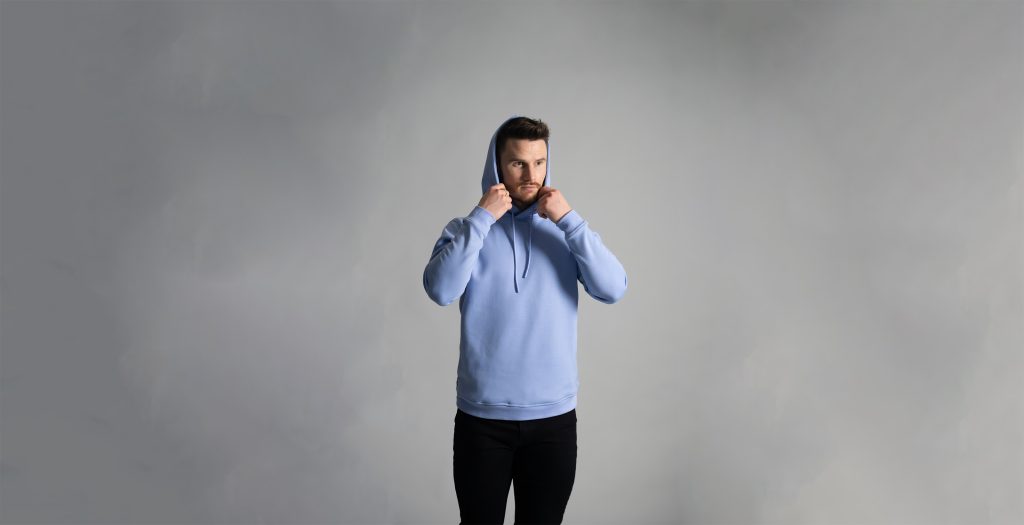
A black long sleeve under a charcoal sweater.
A white long sleeve under a navy sweater.
A gray long sleeve under an olive sweater.
The color combinations are easy.
And when you remove the sweater, you're still wearing a normal shirt.
Should the Long Sleeve Be Visible?
It depends on the look.
For a clean minimalist outfit, I usually prefer the neckline to stay mostly hidden.
If the long sleeve has a contrasting collar or hem, a small amount of visibility can create an intentional layered appearance.
Just avoid having several uneven layers hanging out unless that's the style you're going for.
6. Can You Wear a Long Sleeve T-Shirt Under a Hoodie?
Yes, and it's one of the easiest winter outfits to put together.
A long sleeve beneath a hoodie adds coverage and gives you another layer to remove if you get too warm.
I'd start with the Ten/10 Long Sleeve Curved Hem Tee and layer a clean hoodie over it.
A fitted long sleeve works particularly well because the sleeves are less likely to bunch up inside the hoodie.
For a casual outfit:
Black long sleeve.
Gray hoodie.
Dark jeans.
Clean sneakers.
Add a jacket if the weather requires it.
It's simple, comfortable and appropriate for everyday winter activities.
7. Are Long Sleeve Henleys Good for Winter Layering?
Definitely.
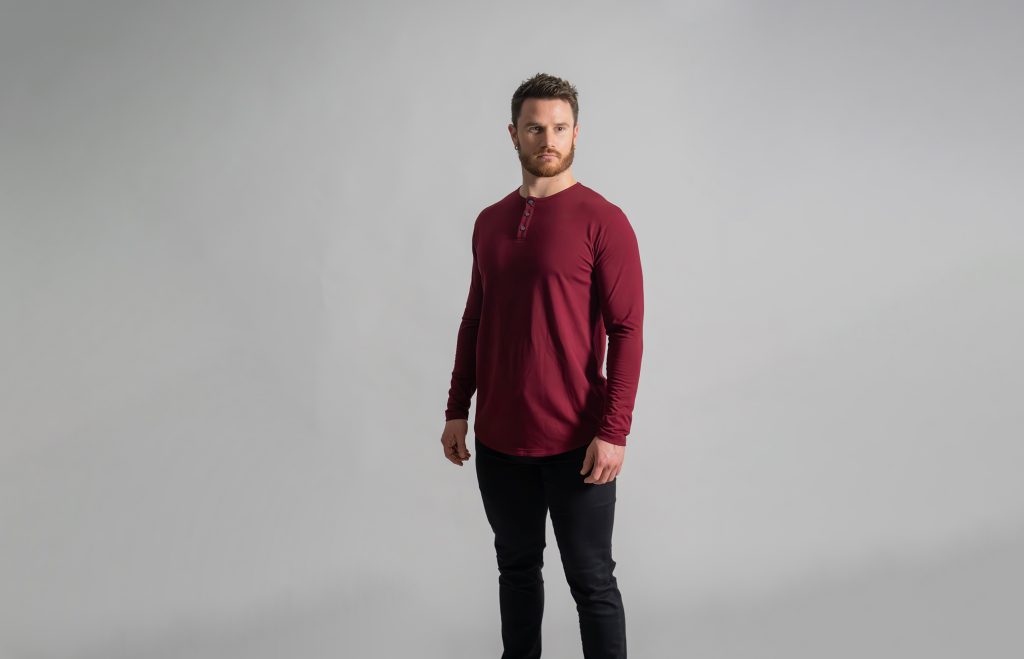
A long sleeve Henley gives you much of the versatility of a regular crew-neck shirt with a little more detail around the neckline.
That's useful because winter outfits often involve taking layers off.
If you remove your jacket at dinner, a Henley can look slightly more styled than a basic crew neck.
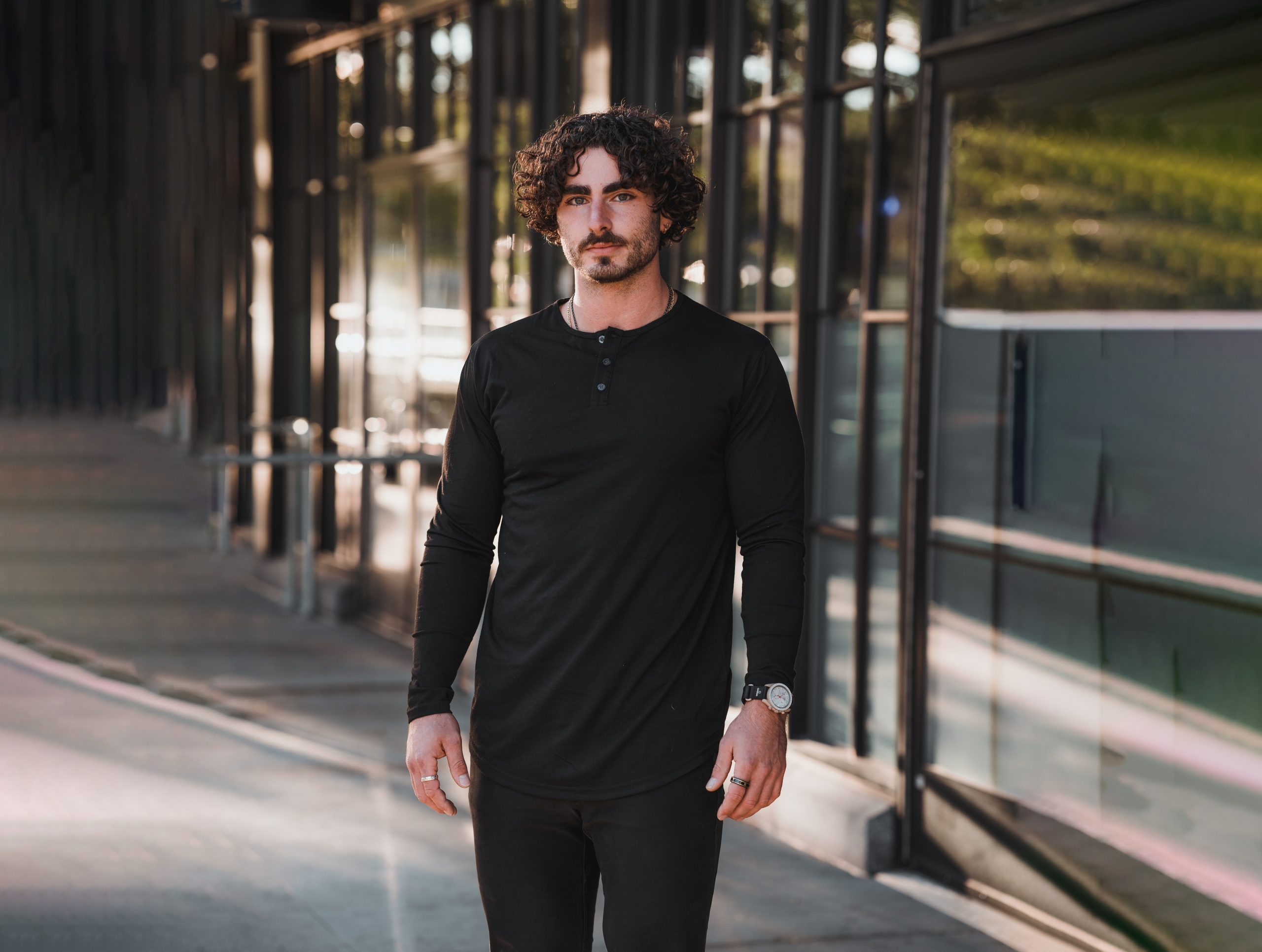
The Ten/10 Long Sleeve Henley is an option for men who prefer that look.
I'd wear it under:
A casual jacket.
An unbuttoned flannel.
A lightweight overshirt.
A relaxed cardigan.
A Henley can also work under some sweaters, although the button placket may create a little extra bulk depending on the neckline.
Crew Neck vs. Henley for Winter
If I want the cleanest possible layer, I'd choose a crew neck.
If I want something that looks more interesting on its own, I'd choose the Henley.
Neither is automatically warmer.
Fabric weight, fit and construction matter more than the neckline.
8. How to Layer Clothes in Winter Without Looking Bulky
I use a simple three-layer approach.
Layer 1: The Base
Start with a comfortable long sleeve T-shirt.
This is the layer closest to your skin.
For everyday wear, choose a shirt that feels good and fits comfortably beneath other clothing.
Layer 2: The Insulating Layer
Add a sweater, fleece or hoodie.
This layer provides additional warmth by helping retain air close to your body.
Layer 3: The Outer Layer
Finish with a jacket or coat appropriate for the conditions.
Wind resistance, insulation and water protection become increasingly important as the weather gets colder.
The beauty of this system is that you can remove layers as temperatures change.
And because the base shirt looks good on its own, you're not stuck wearing an undershirt when you get indoors.
9. Winter Layering Outfits for Different Temperatures
These are starting points rather than strict temperature rules. Wind, rain, humidity, activity level and personal cold tolerance can change what you need.
| Temperature | Suggested Outfit |
|---|---|
| 55–65°F | Long sleeve T-shirt alone or with a light overshirt |
| 45–55°F | Long sleeve + sweater or hoodie |
| 35–45°F | Long sleeve + insulating layer + jacket |
| 25–35°F | Thermal base layer + insulation + winter coat |
| Below 25°F | Technical base layer + substantial insulation + weather-appropriate outerwear |
If I'm walking around a city in 50-degree weather, a long sleeve and lightweight jacket might be plenty.
If I'm standing outside in 30-degree weather for an hour, I need a different setup.
The key is matching the clothing to your actual exposure.
10. Five Winter Outfits Using a Long Sleeve T-Shirt
Outfit 1: Everyday Winter Casual
Dark jeans
Lightweight jacket
Clean sneakers
Best for mild winter days and casual errands.
Outfit 2: Winter Date Night
Charcoal trousers
Casual wool jacket
Leather boots
Best for restaurants, drinks and evening outings.
Outfit 3: Minimalist Winter Look
Black long sleeve
Gray sweater
Black trousers
Minimalist sneakers
Best for everyday polished casual outfits.
Outfit 4: Relaxed Weekend
Long sleeve T-shirt
Cortex Hoodie
Straight-leg denim
Casual sneakers
Best for coffee shops, travel and weekends.
Outfit 5: Cold-Weather Outdoor Outfit
Technical thermal base layer
Insulating fleece
Weather-appropriate winter jacket
Warm trousers and boots
Best for colder temperatures and extended outdoor activities.
For this last outfit, I'd prioritize warmth and moisture management rather than trying to make a regular fashion T-shirt do everything.
11. Common Winter Layering Mistakes
I've made a few of these myself.
Wearing a shirt that's too baggy: Excess fabric can bunch underneath your sweater.
Choosing overly tight layers: You still need comfortable movement.
Wearing cotton during strenuous cold-weather activity: Damp cotton can increase discomfort and heat loss.
Ignoring wind: A warm sweater may not provide enough protection on a windy day.
Wearing too many heavy layers indoors: Overheating and sweating can become uncomfortable when you go back outside.
Forgetting the rest of your body: Appropriate pants, socks, footwear, gloves and headwear matter in cold conditions.
Good winter layering is about managing comfort, not simply piling on clothes.
Frequently Asked Questions
Are long sleeve T-shirts warm enough for winter?
They can be warm enough for mild winter weather or indoor use. In colder conditions, they're generally better worn underneath insulating layers.
Can a regular long sleeve T-shirt be used as a base layer?
Yes, for casual everyday layering. For strenuous activity or extended exposure to freezing conditions, a technical thermal base layer is usually more appropriate.
Should winter base layers be tight or loose?
They should fit close enough to sit comfortably beneath other clothing without restricting movement. Technical base layers may require a closer fit for effective moisture management.
Is a long sleeve T-shirt better than a short sleeve for winter layering?
A long sleeve provides additional arm coverage and can be more comfortable beneath sweaters and jackets. The actual warmth difference depends on fabric, thickness and the complete outfit.
Can you wear a Henley under a winter jacket?
Absolutely. A fitted long sleeve Henley works well beneath casual jackets and overshirts and looks good when worn alone indoors.
What is the best color long sleeve for winter?
Black, navy, charcoal, gray and olive are versatile choices because they pair easily with sweaters, jackets and winter trousers.
Are moisture-wicking long sleeves good for winter?
They can be useful, especially during physical activity. Moisture management helps reduce the amount of sweat remaining against the skin, but the shirt still needs to be combined with suitable insulation and outerwear.
Authority Resources
For practical guidance on layering clothing for cold-weather activities, explore REI's Expert Advice.
For information on outdoor clothing systems and cold-weather preparation, visit the National Park Service.
Related Articles
- Why Curved Hem T-Shirts Are the Best Fitting Men's Tees
- Drop Cut vs. Curved Hem: What's the Difference?
- Are tight longsleeves still in?
Final Thoughts: Long Sleeves Are One of the Most Versatile Winter Layers
So, are long sleeve T-shirts good for layering in winter?
Absolutely.
For everyday winter clothing, they're one of the easiest pieces to build around.
They provide additional coverage.
They fit comfortably beneath sweaters and jackets when properly sized.
And they look good on their own once you remove your outer layers.
For a clean everyday option, consider the Ten/10 Long Sleeve Curved Hem Tee.
If you prefer a little more detail around the neckline, the Long Sleeve Henley is another versatile choice.
Just remember that a regular long sleeve isn't a substitute for a proper thermal system in severe winter conditions.
The best winter outfit isn't the one with the most layers. It's the one that keeps you comfortable, allows you to move and still looks good when you take your jacket off.
Are Tight Long Sleeve Shirts Out of Style in 2026? Here’s What Men Should Know
Best Premium Curved Hem Long Sleeve T-Shirts for Men
