What to Wear When It’s Too Cold for a T-Shirt but Too Warm for a Jacket
When it's too cold for a T-shirt but too warm for a jacket, a lightweight long-sleeve T-shirt or Henley is usually the sweet spot. You get enough coverage to handle cooler air without adding the insulation and bulk of outerwear.
This is probably my favorite kind of weather to dress for—and also one of the easiest to get wrong.
You walk outside in a T-shirt and think:
Yeah, I probably needed another layer.
So the next day you throw on a hoodie or jacket.
Twenty minutes later, you're carrying it around because you're sweating.
I've done both.
What eventually helped me was realizing that I didn't necessarily need more layers. I needed the right middle-weight shirt.
That's where long sleeves become useful.
A lightweight long sleeve gives me more coverage than a short-sleeve tee without turning the outfit into full cold-weather clothing.
And depending on where I'm going, I usually rotate between two options:
A fitted long-sleeve T-shirt when I want something simple.
A long-sleeve Henley when I want the same comfort with a little more style.
This Is Long-Sleeve Weather
There's no exact temperature where every guy suddenly needs to switch from short sleeves to long sleeves.
Wind, humidity, sun, activity level and personal temperature tolerance all matter.
But that roughly 55–65°F range is where I start reaching for long sleeves much more often.
Around 65°F with sun and no wind?
I might still be fine in a T-shirt.
Around 60°F in the shade with some wind?
A lightweight long sleeve starts making a lot more sense.
Around 55°F at night?
That's when I may want the long sleeve with the option of another layer.
So instead of obsessing over one exact temperature, I think about the situation.
If a short-sleeve shirt sounds slightly uncomfortable but a jacket sounds excessive, that's probably long-sleeve weather.
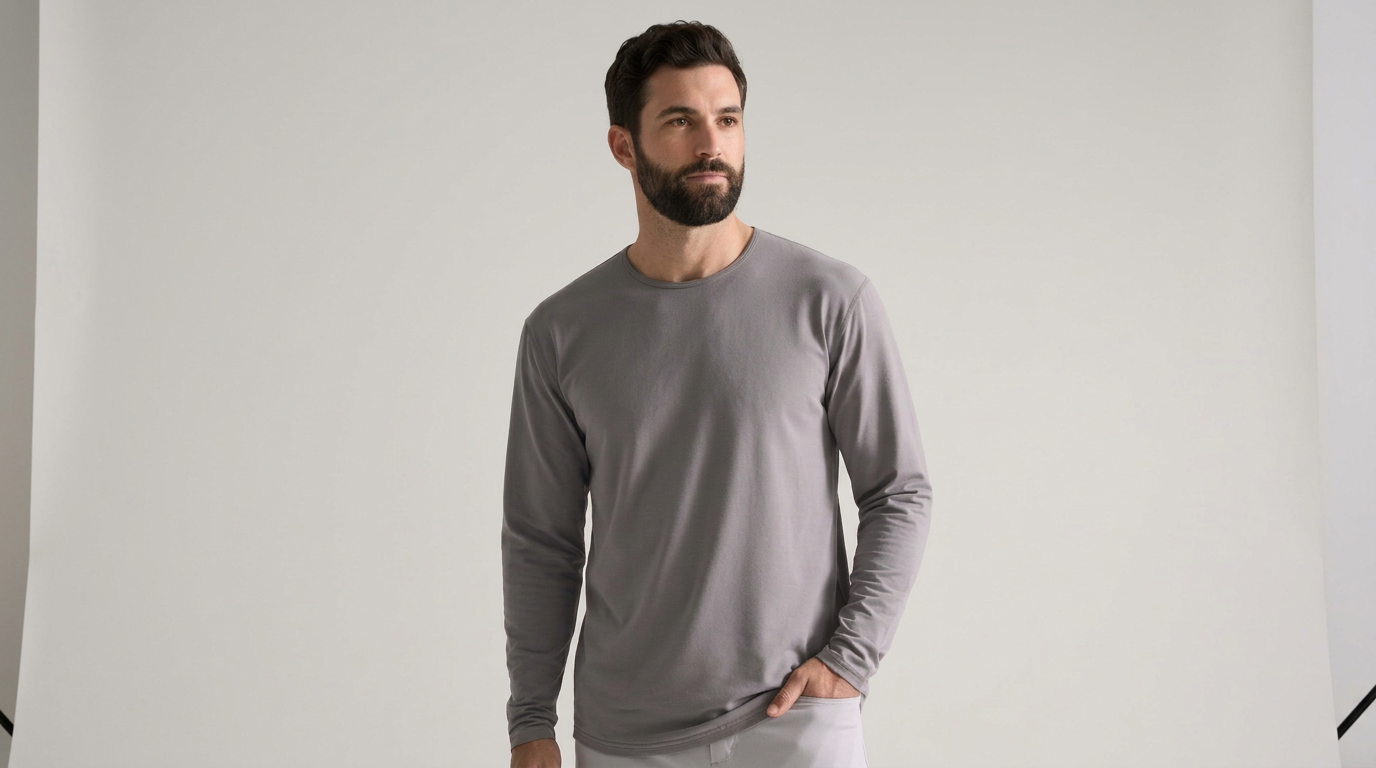
My First Choice: A Lightweight Long Sleeve Curved Hem Tee
This is usually where I start.
A long-sleeve T-shirt is one of those pieces that doesn't seem particularly exciting until you find one that fits correctly.
The problem I've had with traditional long sleeves is the same problem I've had with regular T-shirts.
They can get really boxy.
The chest fits.
The shoulders fit.
Then there's all this unnecessary material around the stomach.
And with long sleeves, you have another problem: extra fabric around the arms and wrists.
That's why I prefer an athletic fit.
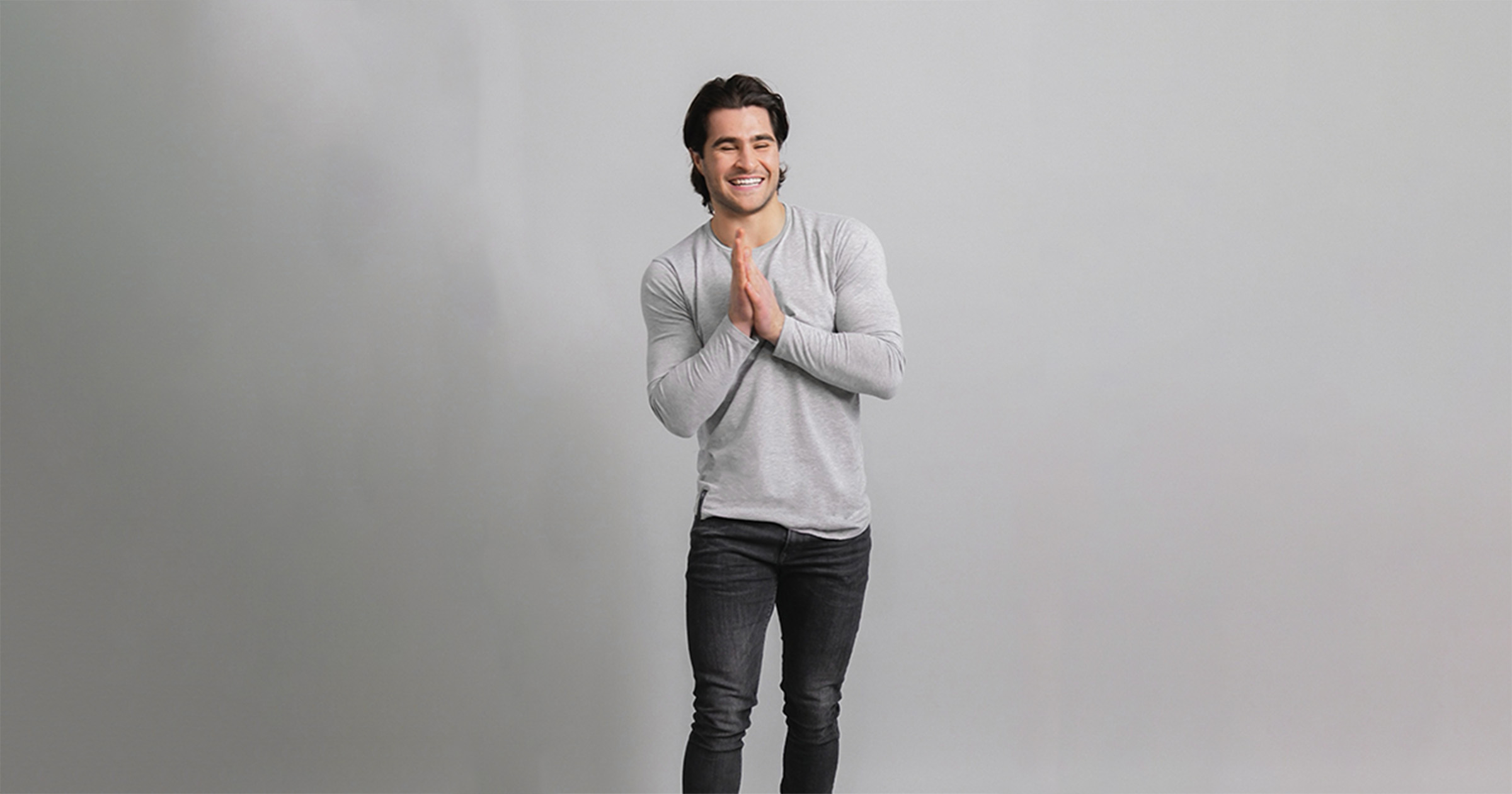
The Long Sleeve Curved Hem Tee gives me the extra coverage I'm looking for while keeping the clean silhouette I like from a fitted T-shirt.
It's simple enough that I don't have to think much about it.
Jeans.
Chinos.
Clean sneakers.
Done.
And the curved hem adds just enough shape at the bottom that the shirt doesn't feel like a basic undershirt with longer sleeves.
Why the Curved Hem Works Especially Well on a Long Sleeve
I notice the hem more on a long-sleeve shirt than I expected.
A traditional straight hem creates a horizontal line across your waist.
A curved hem changes that silhouette.
The sides rise while the front and back extend lower, which gives the shirt more shape when worn untucked.
That's useful because I'm almost always wearing a casual long-sleeve T-shirt untucked.
It also creates a little visual separation between the shirt and pants without adding:
A graphic.
A giant logo.
A pocket.
A pattern.
Or some other unnecessary detail.
That's why curved hems work particularly well if you like minimalist men's clothing.
The shape itself becomes part of the design.
When I Want to Look Better: The Long Sleeve Henley
This is where I'd make the switch.
If I'm just running errands or grabbing coffee, I'm perfectly happy in a long-sleeve tee.
But if I'm going to:
Dinner.
A bar.
A casual date.
A friend's house.
A brewery.
An outdoor event.

Or somewhere I want to look like I put a little more thought into what I'm wearing...
I'm probably choosing the Long Sleeve Henley.
And the reason is surprisingly simple.
The buttons do a lot.
A crew neck is just a crew neck.
A Henley adds a button placket down the center of the chest.
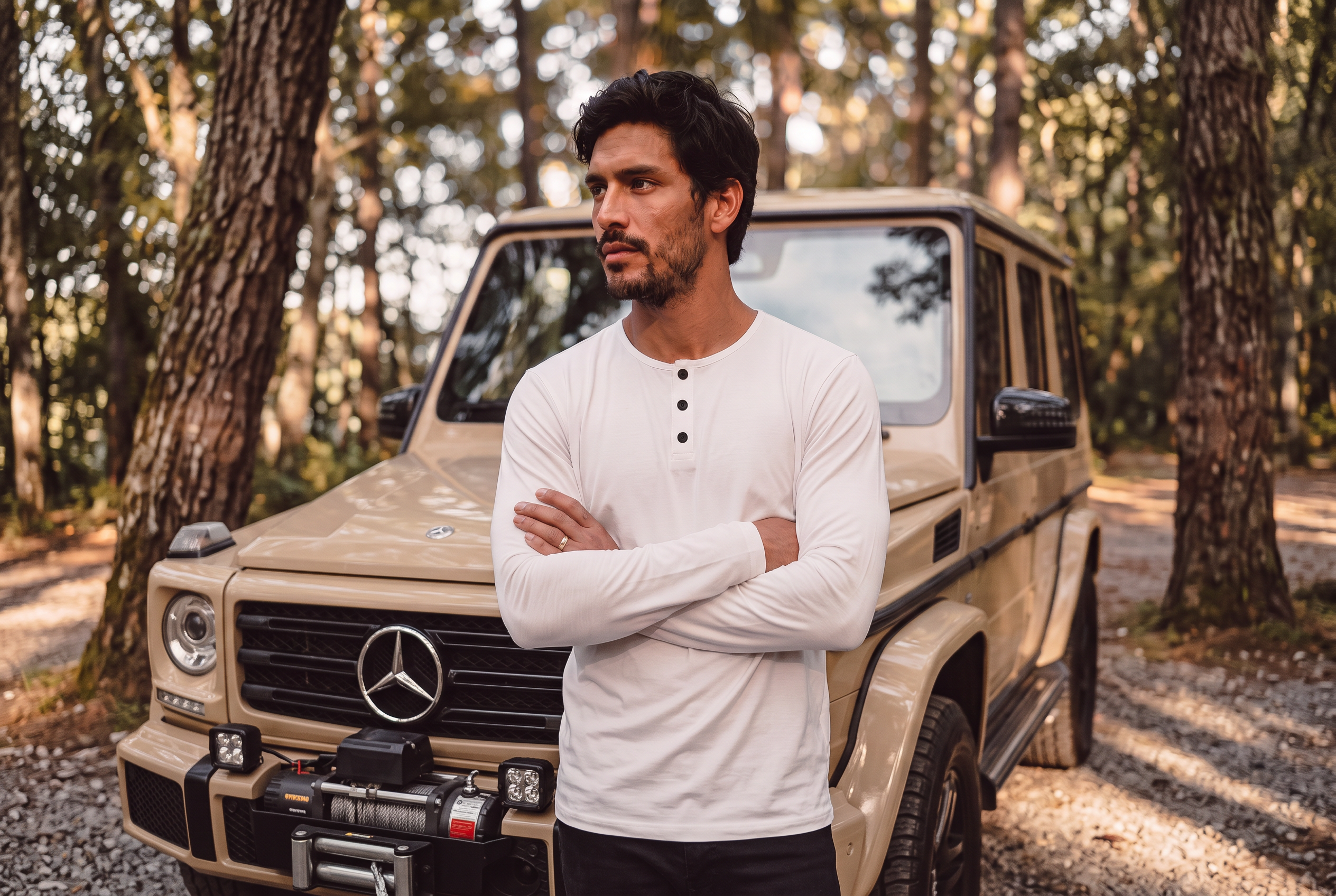
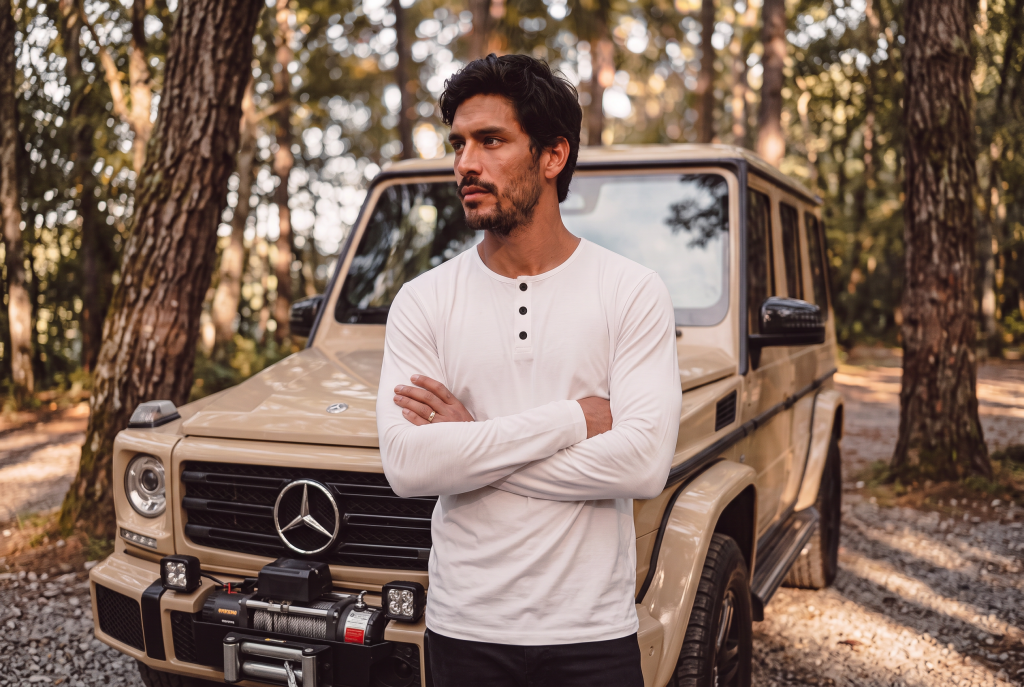
It's a small detail, but visually it makes the shirt feel much more intentional.
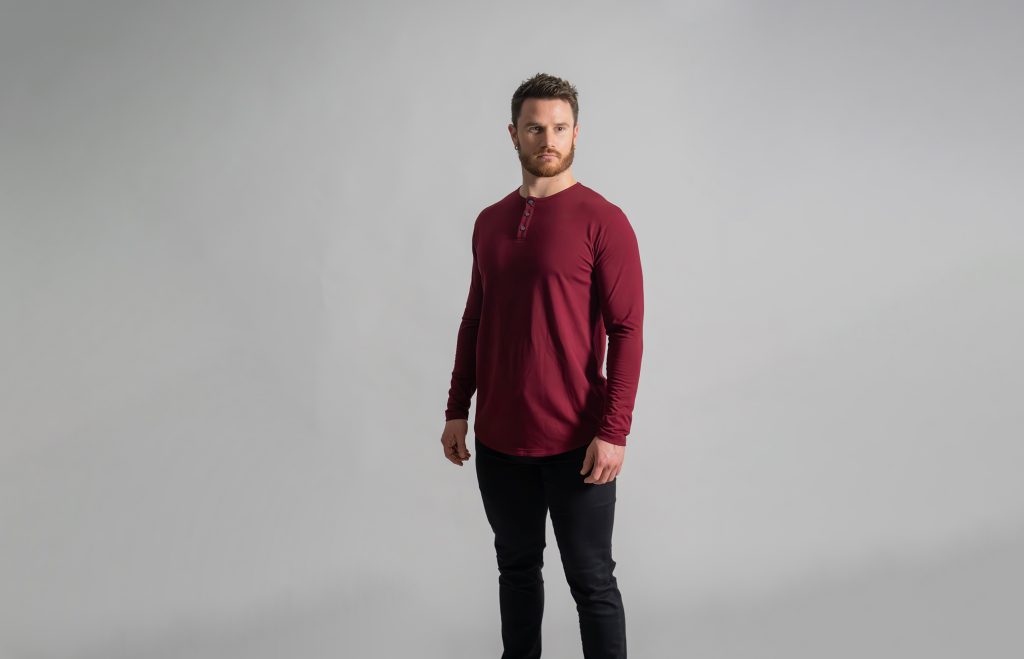
The Ten/10 Long Sleeve Henley Curved Hem keeps the casual feel of a long-sleeve tee while adding that extra structure through the neckline.
That's probably why I've come to think of the Henley as one of the easiest date-night shirts for fall.
You're not dressed up.
But you also don't look like you grabbed the first T-shirt in your drawer.
Why Henleys Work So Well on Athletic Builds
This is another thing I didn't appreciate until I paid attention to the silhouette.
A Henley naturally pulls your eyes toward the upper torso.
The vertical button placket creates a line through the center of the chest.
Then you've got long sleeves framing the arms.
If the shirt is cut correctly through the shoulders and waist, the overall effect works really well on a guy with an athletic build.
That's why I don't like oversized Henleys nearly as much.
If the torso is too loose, you lose the shape that makes the shirt work in the first place.
I want enough room to move comfortably through my shoulders and back, but I still want the fabric to follow my torso.
Athletic fit—not compression fit.
There's a difference.
Long Sleeve T-Shirt vs. Henley: Which One Should You Wear?
This is how I'd decide.
| Situation | What I'd Wear |
|---|---|
| Running errands | Long Sleeve Curved Hem Tee |
| Casual lunch | Long Sleeve Curved Hem Tee |
| Working from a coffee shop | Long Sleeve Curved Hem Tee |
| Traveling | Long Sleeve Curved Hem Tee |
| Casual date | Long Sleeve Henley |
| Dinner | Long Sleeve Henley |
| Drinks with friends | Long Sleeve Henley |
| Outdoor fall event | Either |
| Watching a game at a bar | Henley |
| Minimalist everyday outfit | Long Sleeve Curved Hem Tee |
| Cool morning / warmer afternoon | Lightweight Long Sleeve Tee |
There's plenty of overlap.
The difference for me is mostly how polished I want to look.
The long-sleeve tee is simpler.
The Henley has more personality.
Don't Make the Mistake of Wearing a Heavy Long Sleeve
This is where guys accidentally recreate the jacket problem.
If it's 62°F outside and you're already debating whether you even need long sleeves, you probably don't need an extremely thick shirt.
I want something that gives me coverage without excessive insulation.
That's why fabric weight matters.
A heavyweight cotton long sleeve can get uncomfortable quickly once the temperature rises.
A lighter performance-oriented fabric gives you more flexibility.
That's particularly useful during fall and spring when the temperature might change 15 degrees over the course of the day.
You leave home when it's 57°F.
By lunch, it's 68°F.
Now that lightweight long sleeve makes a lot more sense than the jacket you would have been carrying around.
Fabric Matters More in Transition Weather
This is also where I've become much more particular about fabric.
I don't just want warmth.
I want temperature flexibility.
A good transition-weather shirt should be comfortable when it's cool but still breathable enough when the day warms up.
That's one reason I've become a fan of performance blends.
Stretch helps with movement.
Moisture management helps when temperatures rise.
A softer fabric improves comfort against the skin.
And good shape retention helps the shirt continue looking put together after you've worn it for several hours.
That's also why we've written about what moisture-wicking actually means and the differences between rayon, cotton and polyester.
The fiber composition of a shirt can have a much bigger effect on comfort than most guys realize.
What About a Hoodie?
There's definitely a place for one.
I just think guys reach for hoodies too quickly.
A hoodie adds considerably more visual weight and usually more insulation than a long-sleeve tee.
If it's legitimately chilly, that's great.
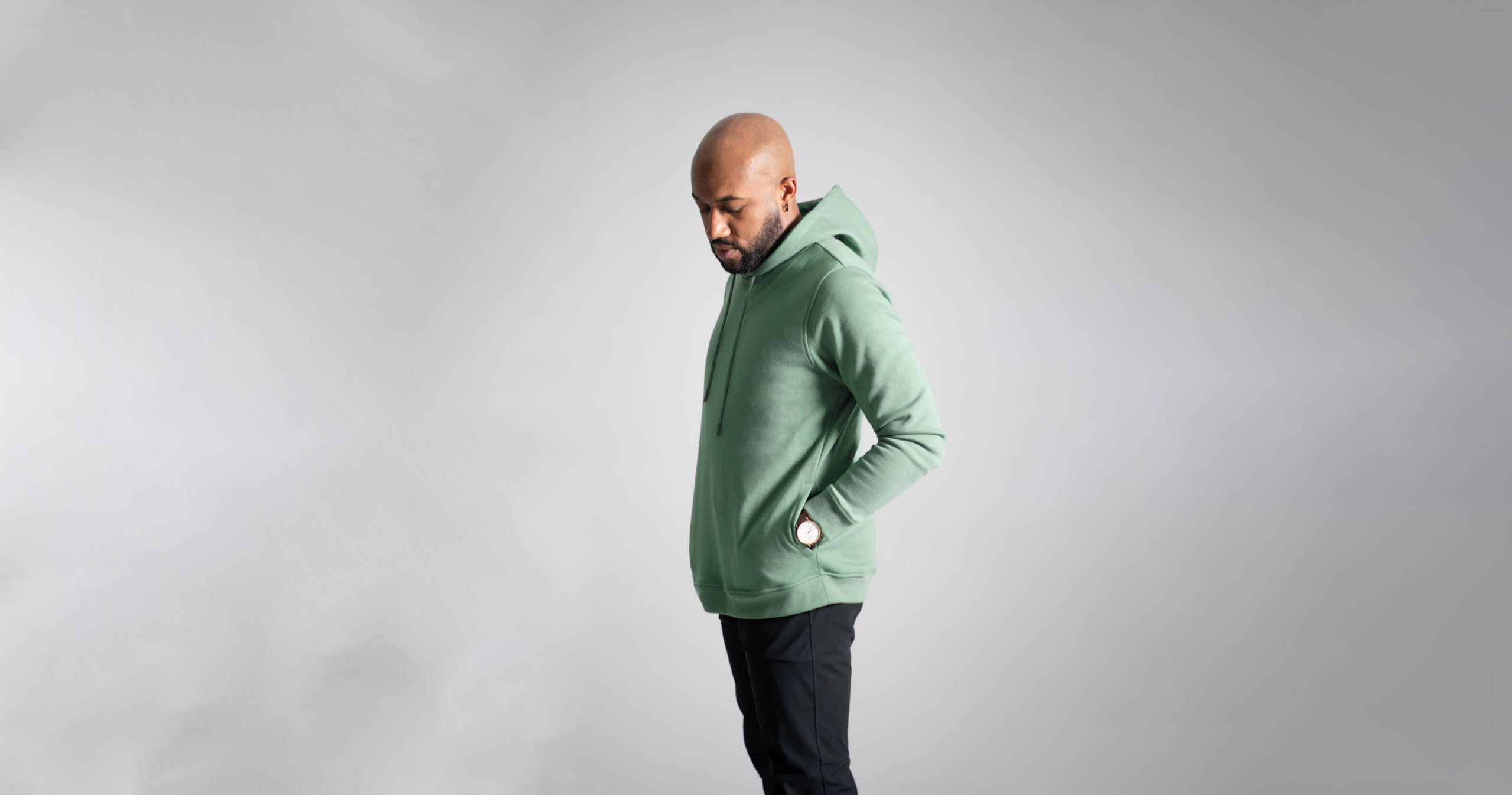
The Ten/10 Cortex Hoodie gives you that next level of coverage when a long sleeve isn't quite enough.
But when the temperature is sitting in that awkward middle zone, I prefer starting lighter.
You can think of it as a simple progression:
T-Shirt → Long Sleeve → Henley → Hoodie → Jacket
You don't have to jump straight from step one to step five.
What I Wear Around 65 Degrees
At around 65°F, I'm probably keeping things lightweight.
If it's sunny and I'm going to be walking around a lot, I may still wear a short-sleeve tee.
But if it's cloudy, windy or I'm going out later in the evening, a lightweight long-sleeve T-shirt is ideal.
I don't want a sweater.
I definitely don't want a heavy jacket.
This is where the Long Sleeve Curved Hem Tee makes the most sense to me.
What I Wear Around 60 Degrees
Around 60°F is where long sleeves really start earning their place in my closet.
During the day, I'd go with the Long Sleeve Curved Hem Tee.
For dinner or drinks, I'd lean toward the Long Sleeve Henley.
This is probably the temperature where I feel most confident leaving the jacket at home.
You get enough coverage through your arms without overheating once you go indoors.
What I Wear Around 55 Degrees
At 55°F, it starts depending much more on what I'm doing.
If I'm going directly from the car into a restaurant, I'm still comfortable wearing a long sleeve.
If I'm going to be standing outside for two hours?
Now I'm thinking about another layer.
That's when the Cortex Hoodie or a lightweight jacket starts making more sense.
This is also why I like starting with a fitted long sleeve underneath.
If I end up removing the outer layer indoors, the shirt underneath still looks like a complete outfit.
Roll the Sleeves Before Taking the Shirt Off
This sounds obvious, but it's one of the reasons I love long sleeves in unpredictable weather.
You're outside and it's 58°F.
Perfect.
Then the afternoon reaches 68°F.
Instead of carrying a jacket, I just push or roll the sleeves up.
Now the same shirt works in both temperatures.
A Henley works particularly well this way.
Undo one or two buttons.
Push the sleeves slightly up the forearms.
The shirt immediately feels more relaxed without actually changing clothes.
That's the kind of versatility I want during transition weather.
Keep the Colors Simple
Fall makes it tempting to suddenly dress like a pumpkin patch.
You don't have to.
For long sleeves, I still prefer building around easy colors:
Black
White
Navy
Gray
Earth tones
Then I can add seasonal colors selectively.
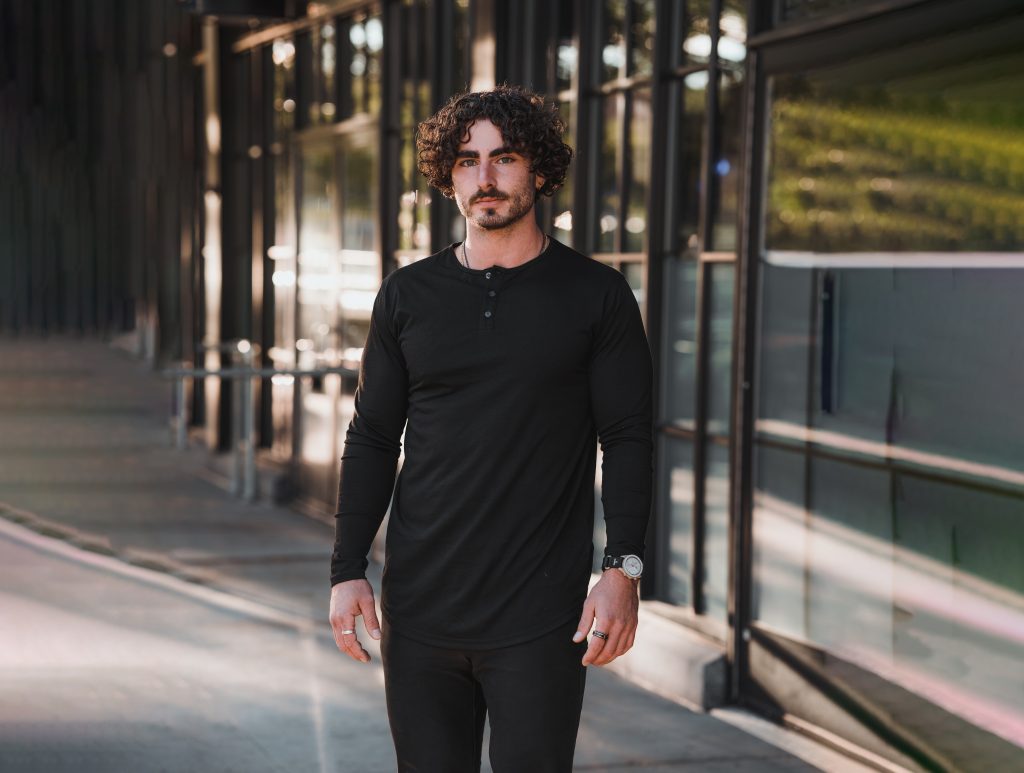
A black Long Sleeve Henley is especially easy because it works almost anywhere.
It looks good with jeans.
It works with chinos.
It works under a jacket when the temperature eventually drops.
And because it's neutral, the texture and fit become more noticeable.
The Fit Matters More Once the Sleeves Get Longer
A short-sleeve T-shirt has relatively few places where the fit can go wrong.
Long sleeves add several.
Pay attention to:
Shoulders
The seam shouldn't be hanging halfway down your upper arm unless you're intentionally going oversized.
Chest
The shirt should follow your chest without stretching tightly across it.
Waist
You shouldn't have a huge amount of excess fabric hanging around your stomach.
Arms
The sleeves should follow your arms without feeling like compression gear.
Wrists
You don't want several inches of material stacking around your hands.
Length
The shirt should be long enough to stay proportionate when you move without looking like a tunic.
That's why athletic-fit long sleeve shirts are so useful for guys with broader shoulders or muscular builds.
Sizing down isn't the solution.
Getting the right cut is.
What If It's Cold in the Morning but Warm in the Afternoon?
This might actually be the best use case for a long-sleeve T-shirt.
I see guys overcomplicate this with layers.
If the morning is around 55–60°F and the afternoon is going to hit the upper 60s, I don't necessarily need to bring three different pieces of clothing.
A lightweight long sleeve handles the morning.
Then I roll the sleeves when it warms up.
Done.
If the morning is substantially colder, I'll add the Cortex Hoodie or a lightweight jacket over it and remove that layer later.
The key is making sure the base shirt looks good by itself.
That's something I think gets overlooked with layering.
Frequently Asked Questions
What should a man wear when it's too cold for a T-shirt but too warm for a jacket?
A lightweight long-sleeve T-shirt or Henley is one of the easiest options. It provides additional arm coverage without the insulation and bulk of outerwear.
Is 60 degrees long-sleeve weather?
For many people, yes. Around 60°F is a useful transition point where a lightweight long sleeve can be comfortable, particularly when it's cloudy, windy or you're spending time outside. Personal preference and conditions matter.
What should men wear in 65-degree weather?
A T-shirt may still work in direct sun, while a lightweight long-sleeve tee is useful for shade, wind, evenings or less-active situations.
Is a Henley warmer than a T-shirt?
A long-sleeve Henley generally provides more coverage than a short-sleeve T-shirt. Actual warmth depends primarily on the fabric weight, construction and fit.
Are Henleys good for fall?
Yes. Henleys work particularly well during fall because they provide long-sleeve coverage while remaining casual and easy to wear without a jacket.
Should a men's Henley be tight?
It should generally follow the shape of your torso without restricting movement. I prefer an athletic fit that provides room through the shoulders and chest while keeping excess fabric around the waist under control.
What can I wear instead of a jacket in cool weather?
Depending on the temperature, try a long-sleeve T-shirt, Henley, lightweight hoodie, overshirt or sweater. For mild transition weather, a lightweight long sleeve is often enough.
Style Resources
For more general guidance on building a versatile men's wardrobe, Primer Magazine has practical advice around casual menswear, layering and seasonal dressing.
GQ Style is also useful for broader inspiration around contemporary menswear and how long-sleeve basics fit into modern casual wardrobes.
Related Articles
Final Thoughts: Stop Jumping Straight From a T-Shirt to a Jacket
This was really the change that made transition weather easier for me.
I used to think in two categories.
Warm = T-shirt.
Cold = jacket.
But there's a huge amount of weather between those two.
That's where I get the most use out of a good long sleeve.
If I want something clean and simple, I'm reaching for the Ten/10 Long Sleeve Curved Hem Tee.
If I'm going to dinner, drinks, a date or somewhere I want to look slightly more put together, I'm choosing the Long Sleeve Henley.
And when it gets cold enough that neither is quite enough, that's when I add the Cortex Hoodie or a jacket.
It's a simple system, but it solves that annoying question every fall and spring:
What do I wear when a T-shirt isn't enough, but a jacket is way too much?
For me, the answer is almost always a long sleeve.
Best Casual Winter Clothes for Men With an Athletic Build
Best Simple Winter Clothing Pieces for Men