Where to Get Minimalist Streetwear With an Athletic Fit
For a while, I had a problem with minimalist streetwear.
I liked the look. I hated the fit.
I wanted simple colors, almost no branding, premium fabric and clothes that didn't look like I was trying too hard.
But whenever I searched for minimalist men's clothing, I kept running into oversized tees, dropped shoulders and boxy silhouettes.
That's a great look if that's what you're going for.
It just wasn't what I wanted.
I wanted the simplicity of modern streetwear with a shirt that still showed that I had shoulders, a chest and arms.
Eventually, I realized I wasn't really searching for traditional streetwear.
I was looking for minimalist streetwear with an athletic fit.
And there's a big difference.
What I Actually Mean by "Minimalist Streetwear"
When I say minimalist, I'm not talking about wearing nothing but an enormous $300 white T-shirt.
For me, the look comes down to a few things:
- Clean silhouettes
- Solid colors
- Little or no visible branding
- Premium-feeling fabrics
- Modern cuts
- Pieces that can be worn repeatedly
- No unnecessary graphics or design details
The clothes should look good because of the fit and fabric, not because there's a massive logo across the chest.
That's ultimately what led us toward the same philosophy with Ten/10 Apparel. The brand currently describes its approach as minimalist menswear built around custom-engineered fabrics and an athletic fit.
The Part I Couldn't Find: Minimalist Without Being Boxy
This was the real issue for me.
A lot of contemporary streetwear intentionally creates volume.
The shoulders drop.
The sleeves get wider.
The torso gets boxier.
The shirt gets longer or sometimes wider and shorter.
Again, there's nothing wrong with that.
But if you've spent time in the gym—or you're naturally broad through the upper body—it can completely hide your proportions.
What helped me was looking for a different shape:
Room through the shoulders + fitted sleeves + defined chest + cleaner waist.
That's much closer to an athletic fit T-shirt.
I still get the minimalist aesthetic. I just don't disappear inside the shirt.
1. Heritage Curved Hem Tee — Where I'd Start
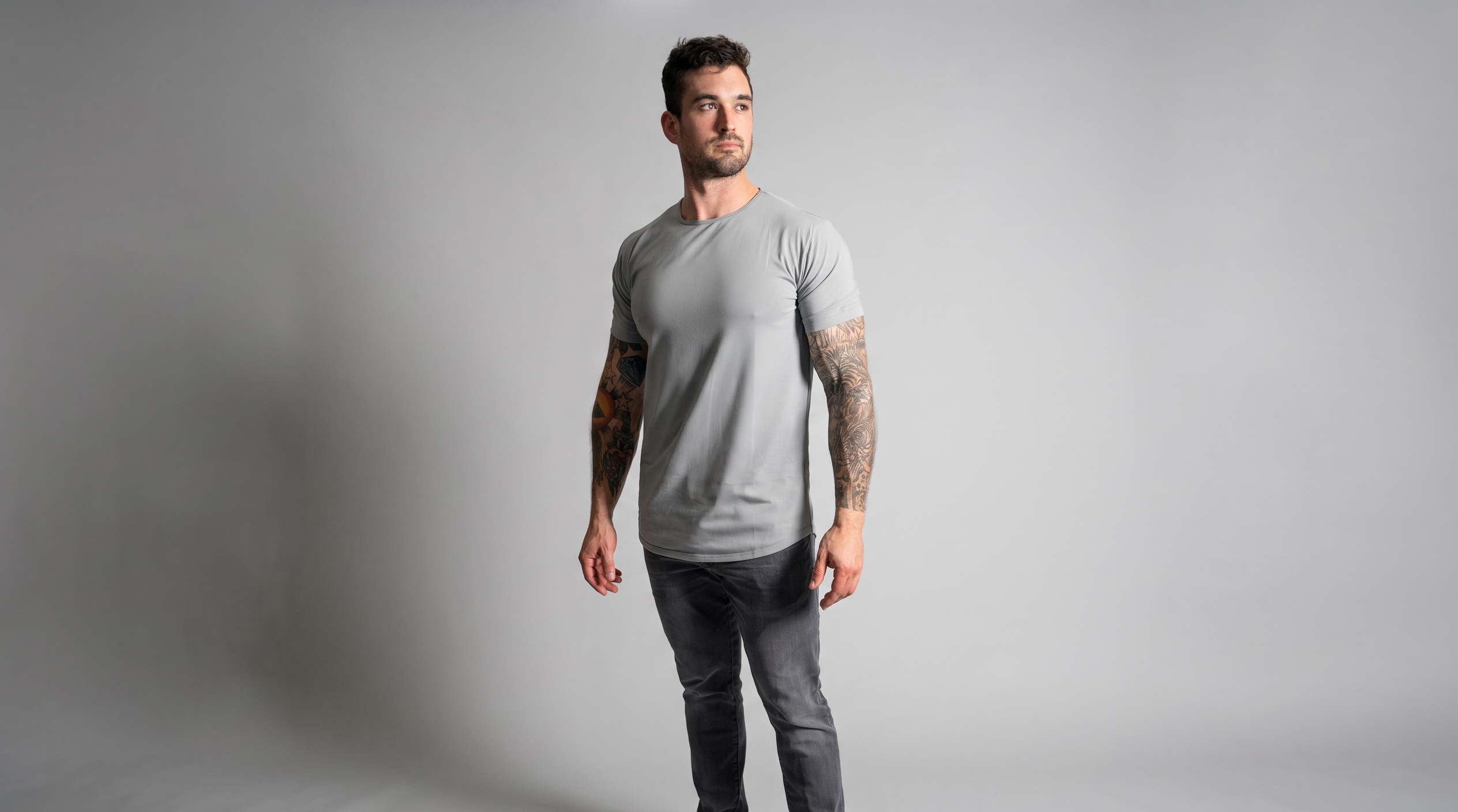
If someone asked me what one shirt best represents the look I'm talking about, I'd start with the Heritage Curved Hem Tee.
There's no huge graphic.
There's no giant branding.
There's no complicated design trying to get your attention.
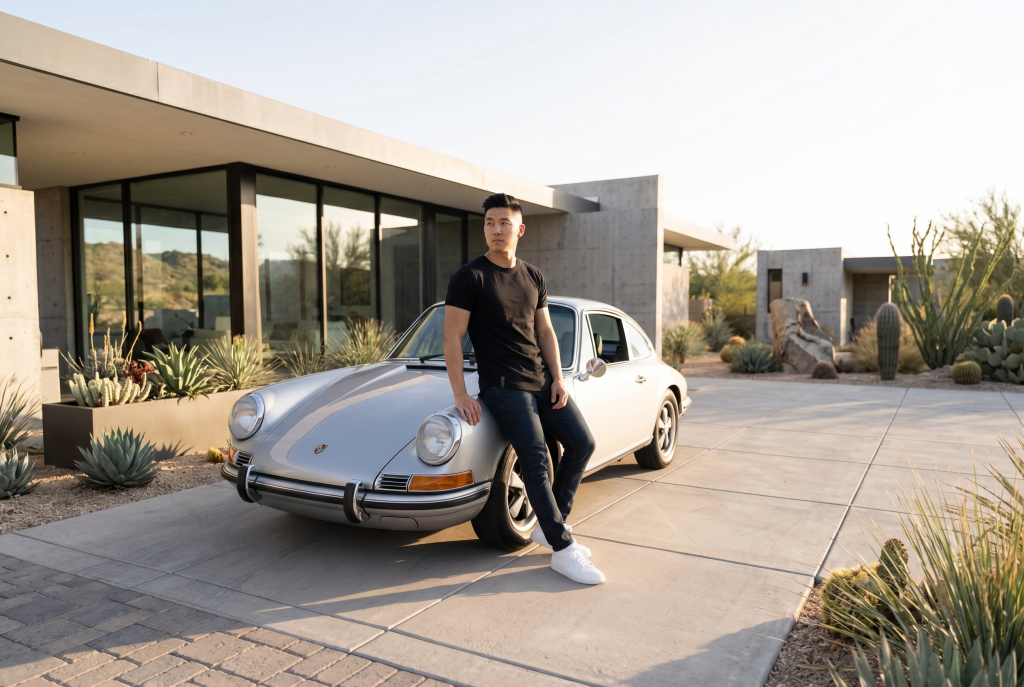
The shape and material are what make the shirt.
The Heritage is tailored around an athletic form fit and uses Ten/10's Aero-Blayde™ fabric, a 50% rayon, 38% nylon and 12% spandex blend. It's also designed with four-way stretch, wrinkle resistance, moisture management and a more substantial premium feel than the original Curved Hem Tee.
This is what I think premium minimalist clothing should do.
At first glance, it's simple.
When you actually put it on, the difference is in the details.
The Curved Hem Changed the Look More Than I Expected
I originally thought the curved hem was just a small design feature.
Then I started wearing one.
A standard straight-bottom tee creates a hard horizontal line across your body. With a curved hem, the sides rise while the front and back extend lower.
That creates a more shaped silhouette when the shirt is untucked.
Ten/10's own fit guide describes the curved hem as helping create a cleaner drape and visually lengthening the torso compared with a conventional straight hem.
For athletic fit streetwear, I like that because it adds visual interest without adding a graphic, pattern or logo.
The shape becomes the design.
2. Stratus Polo — When I Want Something Simpler
I don't need every T-shirt I own to be the premium version.
For an everyday option, I'd go with the original Stratus Polo.
It keeps the athletic silhouette, fitted approach and minimalist branding with the refined collar of a classic polo.
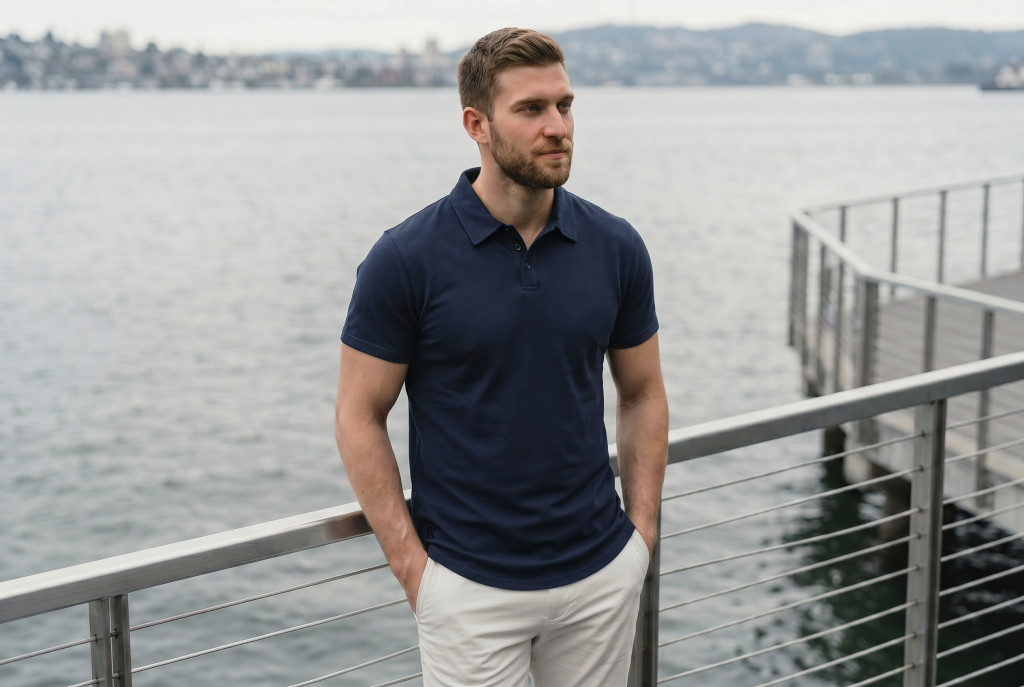
Ten/10's current Stratus Polo is designed with four-way stretch, wrinkle resistance and an athletic form fit. The brand also specifically emphasizes minimal branding rather than large logos or artwork.
This is probably the piece I'd get in multiple neutral colors.
Black.
White.
Granite.
Then I'd add seasonal colors once the basics were covered.
That's another thing I've learned about minimalist streetwear for men: you don't necessarily need more designs.
Sometimes you just need the same great silhouette in better colors.
3. A Henley Works Surprisingly Well With Minimalist Streetwear
I didn't always think of Henleys as streetwear.
But a modern fitted Henley can work really well if you're trying to keep everything understated.
The reason is the neckline.
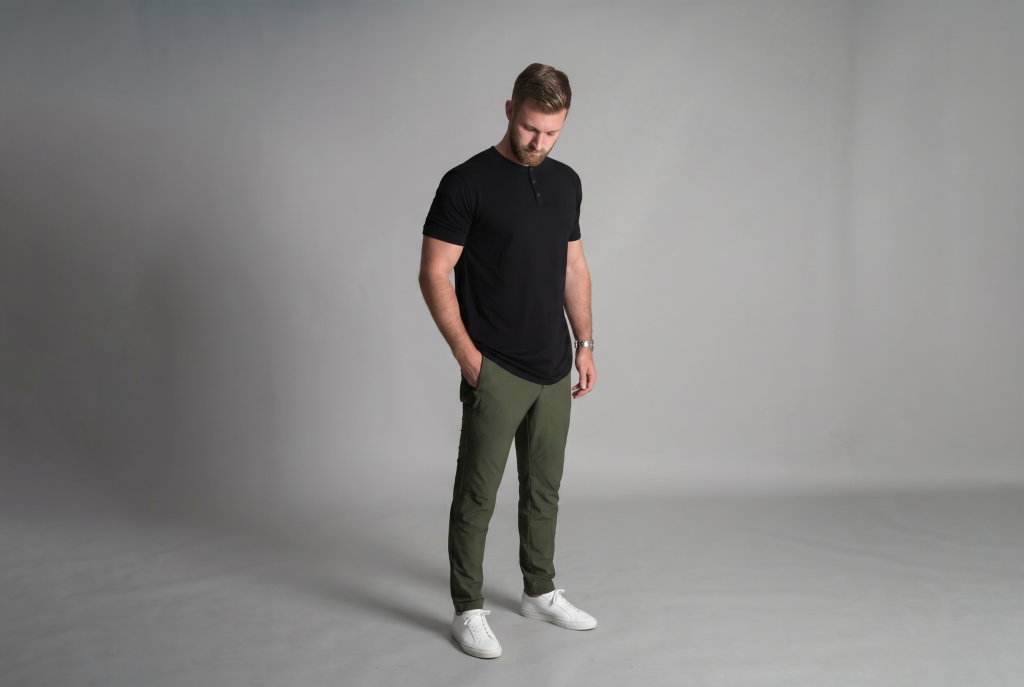
The button placket gives you some detail through the chest without requiring a graphic or logo.
That's particularly useful when most of your wardrobe consists of solid colors.
Ten/10's Short Sleeve Henley Curved Hem uses the same general philosophy: athletic form fit, minimal branding and a proprietary stretch-oriented fabric.
For me, this is what keeps a minimalist wardrobe from becoming boring.
You change texture, neckline, fabric and silhouette—not necessarily the amount of branding.
What I Look for in Streetwear as a Guy Who Lifts
This is where my shopping process changed the most.
I stopped looking at the model and started looking at the actual construction of the shirt.
If you're searching for streetwear for muscular men, pay attention to four areas.
Shoulders
I want the shoulder seam sitting relatively close to my actual shoulder rather than halfway down my arm.
Sleeves
I prefer sleeves that lightly follow my biceps instead of flaring outward.
Chest
I want enough room that the fabric isn't pulling, but enough shape that my chest doesn't disappear.
Waist
This is the big one.
I don't want the shirt dropping straight from my chest like a curtain.
I want some shape through the torso.
That's the difference between men's fitted streetwear and simply getting an undersized T-shirt.
I Don't Want Skin-Tight Either
This is important.
Athletic fit doesn't mean compression shirt.
I don't want every line of my body visible.
If the buttons are pulling, the sleeves are cutting into my arms, or I can't comfortably reach forward, the shirt is too small.
What I want is a shirt that follows my shape without squeezing it.
Stretch fabric helps enormously here.
That's one reason I've gravitated toward blends rather than only rigid cotton tees. Ten/10's Heritage fabric, for example, contains 12% spandex and is specifically built around four-way stretch while retaining a tailored silhouette.
You get a closer fit without feeling trapped inside the shirt.
Minimal Branding Became More Important as I Got Older
My relationship with streetwear changed as I got older.
I still like the clean sneakers.
I still like modern cuts.
I still like darker monochromatic pieces.
What I don't necessarily want anymore is a massive graphic across my chest.
That's why no-logo / small logo men's clothing has become much more appealing to me.
Ten/10 deliberately describes its shirts around minimal, seamless branding rather than large logos and artwork.
The result feels more versatile.
I can wear the same shirt casually during the day and not feel like I need to change before going somewhere nicer that evening.
That's where minimalist streetwear starts blending into elevated basics for men.
And personally, that's exactly where I want my wardrobe.
Don't Ignore Fabric Just Because the Design Is Simple
This was another mistake I used to make.
I'd see a plain black tee and think:
"It's just a black T-shirt."
But when the entire design is intentionally simple, fabric becomes much more noticeable.
There's nowhere for bad material to hide.
A minimalist shirt needs to:
Hold its shape.
Feel good against your skin.
Drape properly.
Recover after stretching.
Maintain the neckline.
Avoid becoming a wrinkled mess after sitting for an hour.
That's one reason the Heritage has become such an important piece in this category for me. Its modal-rich Aero-Blayde™ blend is positioned as the premium upgrade to the classic Curved Hem, with a smoother feel, richer texture and more substantial construction.
When there's no giant graphic competing for attention, those small details matter.
Build the Wardrobe Around Neutral Colors First
If I were rebuilding a minimalist wardrobe from scratch, I wouldn't get 15 colors immediately.
I'd start with:
Black
White
Granite/gray
Then I'd add darker seasonal neutrals and muted colors.
This keeps everything easy to wear without making your closet feel identical.
And once you've found a silhouette that fits your body correctly, owning it in several colors actually makes sense.
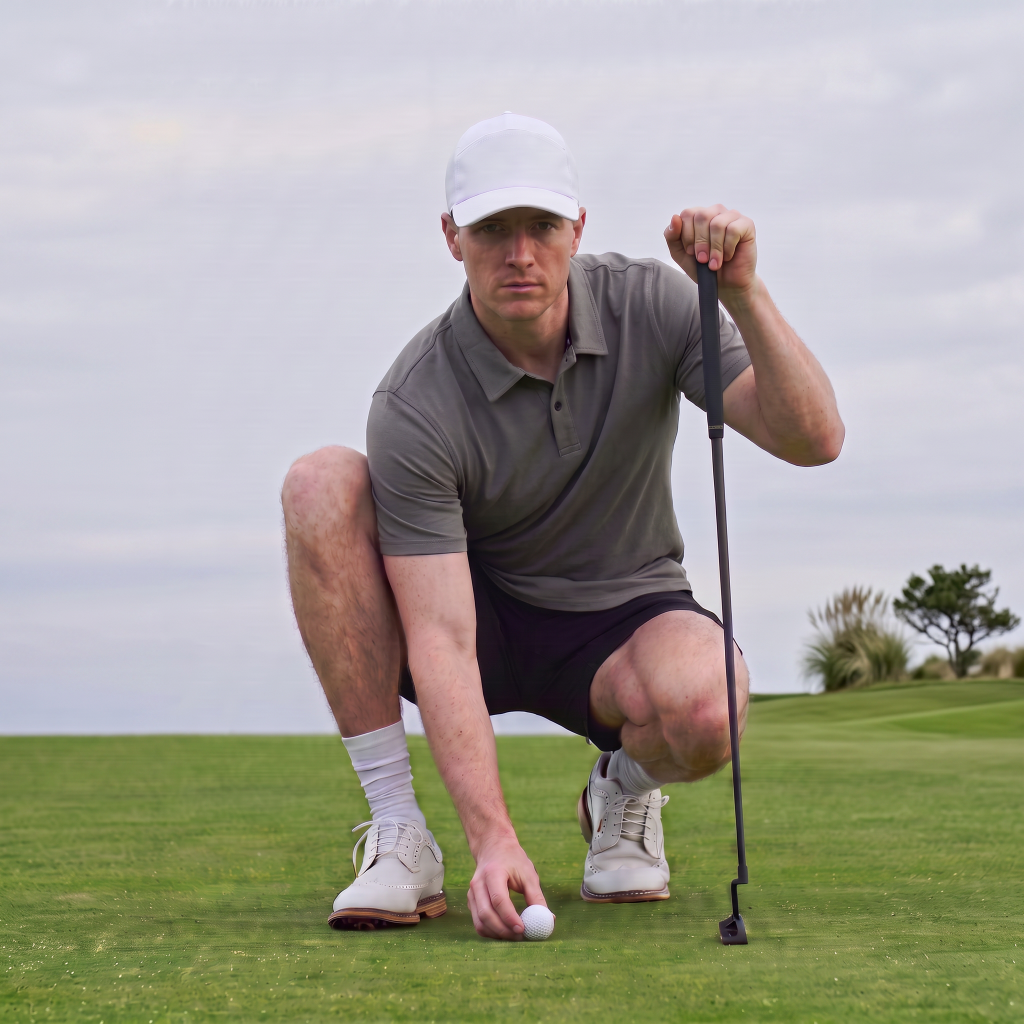
I'd rather have four excellent T-shirts I wear constantly than twelve shirts I bought because each one had a different graphic.
Minimalist Streetwear Doesn't Have to Be Oversized
This is probably the main thing I wish I'd realized sooner.
Minimalism is an aesthetic. Oversized is a fit.
They're not the same thing.
You can have:
Minimalist oversized streetwear.
Minimalist relaxed-fit streetwear.
Minimalist slim-fit streetwear.
And minimalist athletic-fit streetwear.
If you're broader through your shoulders and chest, you don't have to wear a giant boxy T-shirt just because that's what's currently associated with streetwear.
Find the silhouette that makes your body look best.
For me, that's a shirt with more structure through the upper body, fitted sleeves, stretch and less unnecessary fabric around the waist.
If You're Muscular, Don't Just Size Down
I've made this mistake too.
You find a shirt you like.
It's too loose.
So you size down.
The waist improves—but now your chest and arms are fighting the shirt.
That's not athletic fit.
That's just wearing the wrong size.
A properly designed minimalist shirt for an athletic build should accommodate the upper body while still creating a cleaner lower torso.
That's also why we've written specifically about the best shirts for broad shoulders and why curved hem T-shirts can fit better than traditional tees. The same fit problem shows up repeatedly: guys need room up top without unnecessary fabric everywhere else.
What I'd Get First
If you're trying this style for the first time, don't overhaul your entire closet.
I'd start with three pieces.
1. Black Heritage Curved Hem Tee
This would be my premium anchor piece.
2. White or Granite Classic Curved Hem Tee
Something lighter for everyday rotation.
3. Black Short Sleeve Henley
Enough variation to keep the minimalist look from becoming repetitive.
From there, I'd add long sleeves, polos, hoodies and outerwear while sticking to the same principle:
Clean design. Great fabric. Athletic shape. Minimal branding.
That's a wardrobe rather than a collection of random shirts.
Style Resources
For broader men's style inspiration, GQ Style is useful for seeing how minimalist pieces, streetwear influences and elevated basics move in and out of contemporary menswear.
I also like Primer Magazine for more practical men's style advice. It's a good counterbalance when you want ideas you can actually incorporate into an everyday wardrobe rather than simply following runway trends.
Frequently Asked Questions
Where can I get minimalist streetwear with an athletic fit?
Ten/10 Apparel is worth considering if you want minimalist menswear with more emphasis on an athletic silhouette. Its Curved Hem and Heritage Curved Hem tees combine minimal branding with fitted proportions and stretch-oriented fabrics.
Is minimalist streetwear always oversized?
No. Minimalism describes the overall aesthetic, while oversized describes the garment's fit. Minimalist clothing can be oversized, relaxed, slim or athletic.
What streetwear looks good on muscular guys?
Look for shirts with enough room through the shoulders and chest, fitted but comfortable sleeves, and less excess fabric through the waist. Stretch can also make a closer silhouette significantly more comfortable.
Are curved hem T-shirts good for streetwear?
Yes. A curved hem introduces shape without requiring graphics or loud design elements, making it especially useful for a minimalist wardrobe.
What colors are best for minimalist men's clothing?
Black, white, gray, navy and other muted neutrals are easy starting points. Once you've established those basics, adding subdued seasonal colors can keep the wardrobe from becoming repetitive.
What's the difference between athletic fit and slim fit?
A slim fit generally reduces width throughout the garment. An athletic fit is typically designed to accommodate a broader upper body while creating a cleaner silhouette toward the waist. Exact definitions vary by brand.
Summary: I Wanted Streetwear That Still Looked Like Me
The reason I struggled with minimalist streetwear with an athletic fit was that I initially treated those as two separate styles.
They don't have to be.
I can still have the understated look I like:
No giant logos. No unnecessary graphics. Clean colors. Premium materials. Modern details.
I just want those things on a shirt that actually complements my build.
That's where I'd start with Ten/10 Apparel.
The biggest thing I learned was simple:
I didn't need to choose between minimalist style and an athletic fit. I just needed to stop assuming minimalist streetwear had to be oversized.
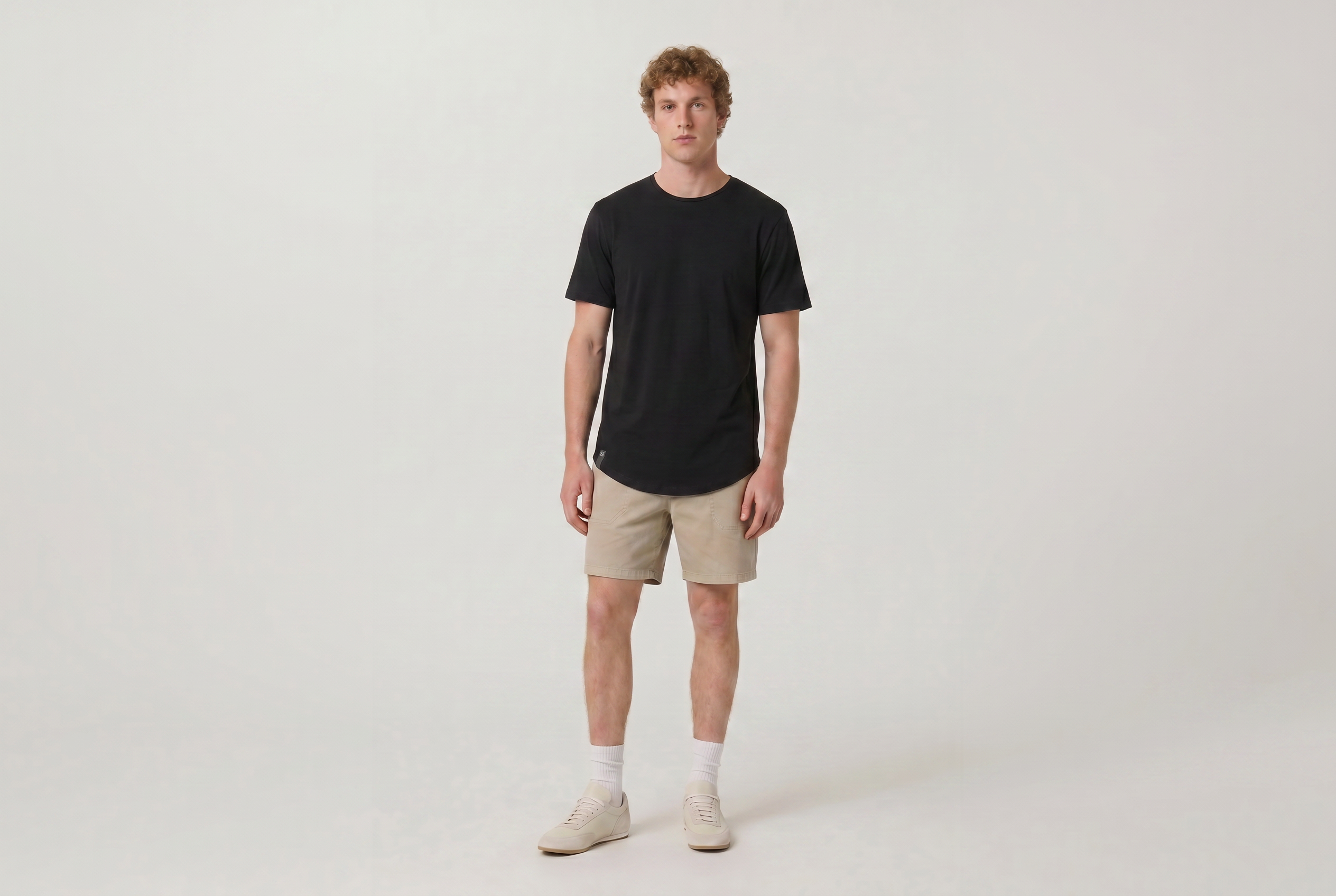
How Tight Should a Curved Hem Men’s Shirt Be?
Best T-Shirts for Guys With a V-Shaped Body