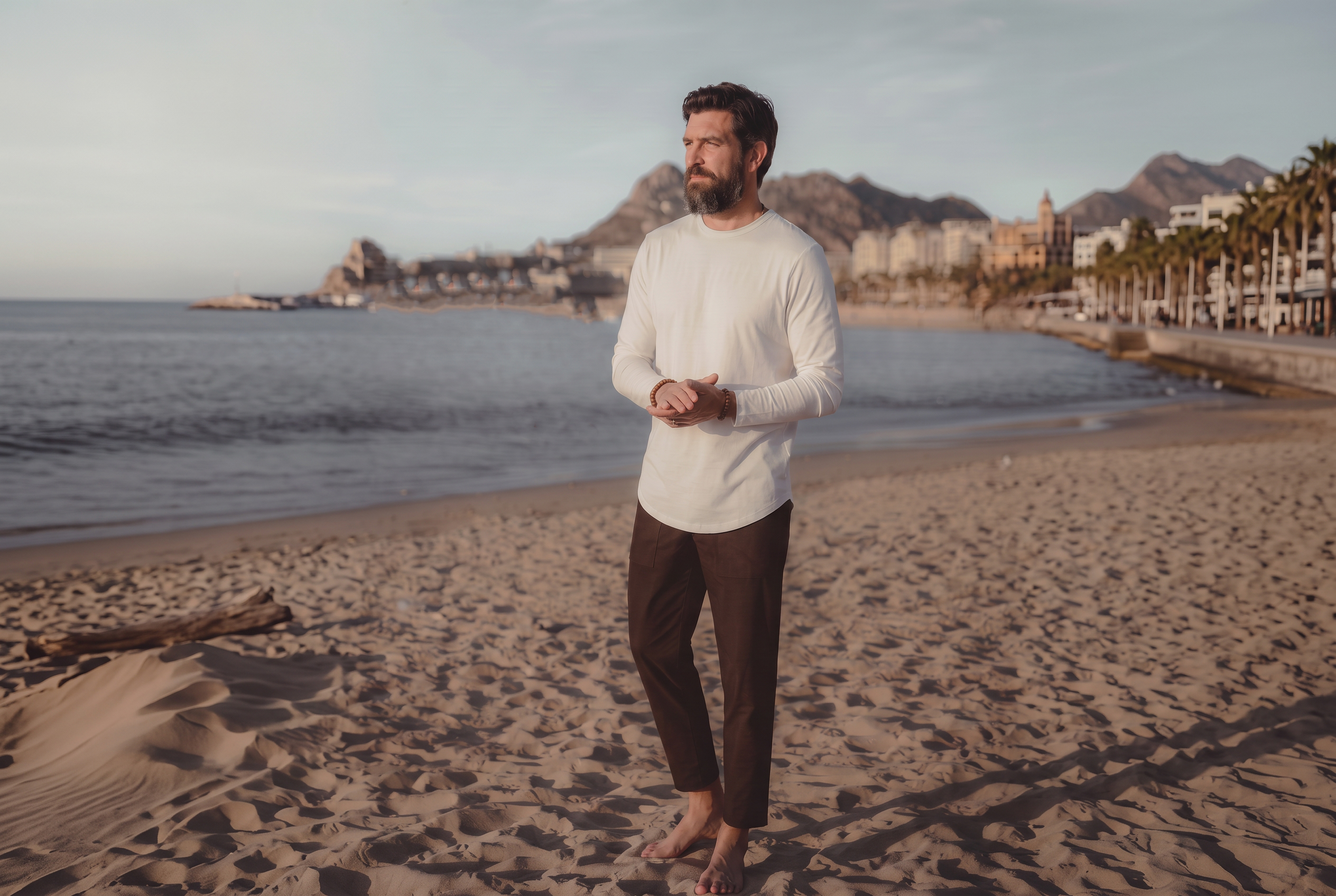
Why Curved Hem T-Shirts Look Better Untucked
Curved hem T-shirts usually look better untucked because the rounded bottom creates a more intentional finish than a straight horizontal hem. The shape adds visual movement, exposes more of the leg at the sides, and works especially well with athletic or tapered fits.
This is one of those things I didn’t really notice until I started paying attention to it.
For years, I wore regular straight-bottom T-shirts and never thought much about the hem.
Then I started wearing curved hems.
And once I did, a lot of regular tees suddenly looked… unfinished.
Not bad.
Just boxier.
The curved hem did something subtle that I liked:
it made an untucked T-shirt look like it was actually designed to be worn untucked.

That sounds obvious, but a lot of basic T-shirts still feel like rectangular pieces of fabric with sleeves attached.
The curved hem changes that.
The Straight Hem Creates a Hard Horizontal Line
This is really the first thing I noticed.
A traditional T-shirt usually ends like this:
────────
It creates a hard visual line across your lower torso.
If the shirt is already a little loose around the waist, that horizontal line can make the whole shirt look even more rectangular.
That’s the exact opposite of what I want.
I prefer a shirt that follows the shape of my body rather than turning my torso into a box.
A curved hem changes the bottom edge.
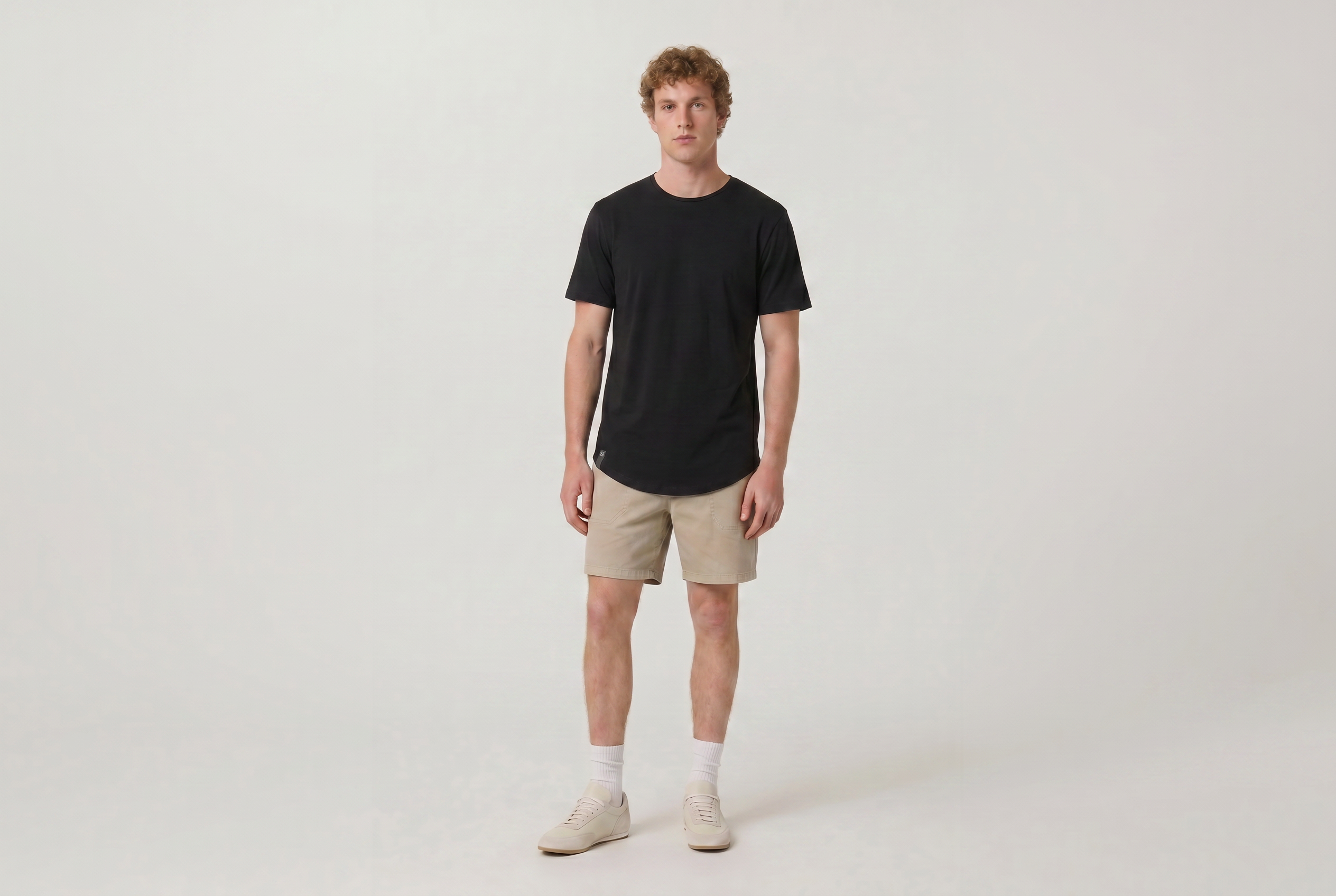
Instead of one flat cutoff, the sides rise while the front and back extend slightly lower.
Visually, it looks more like this:
╰──────╯
That little change adds shape without requiring graphics, patterns, logos, or extra details.
For me, that’s the appeal.
Why It Looks More Natural Untucked
When you tuck a shirt in, the hem mostly disappears.
When you wear it untucked, the hem becomes part of the outfit.
That’s why the shape matters.
A curved hem gives the shirt a natural-looking endpoint.
It almost creates its own finish.
That’s one reason I think curved hems are among the best T-shirts to wear untucked.
They don’t look like:
“I forgot to tuck this in.”
They look like:
“This shirt was meant to sit this way.”
That distinction is small, but visually it matters.
The Sides Show More of Your Legs
This is another thing I didn’t appreciate until I wore both styles side by side.
A curved hem typically rises higher along the sides than the center.
That means more of your pants—and more of your leg line—shows from the side.
Why does that matter?
Because a long straight hem can visually shorten your legs.
If the shirt drops low across your entire torso, your upper body can start looking longer and heavier.
A curved hem breaks that up.
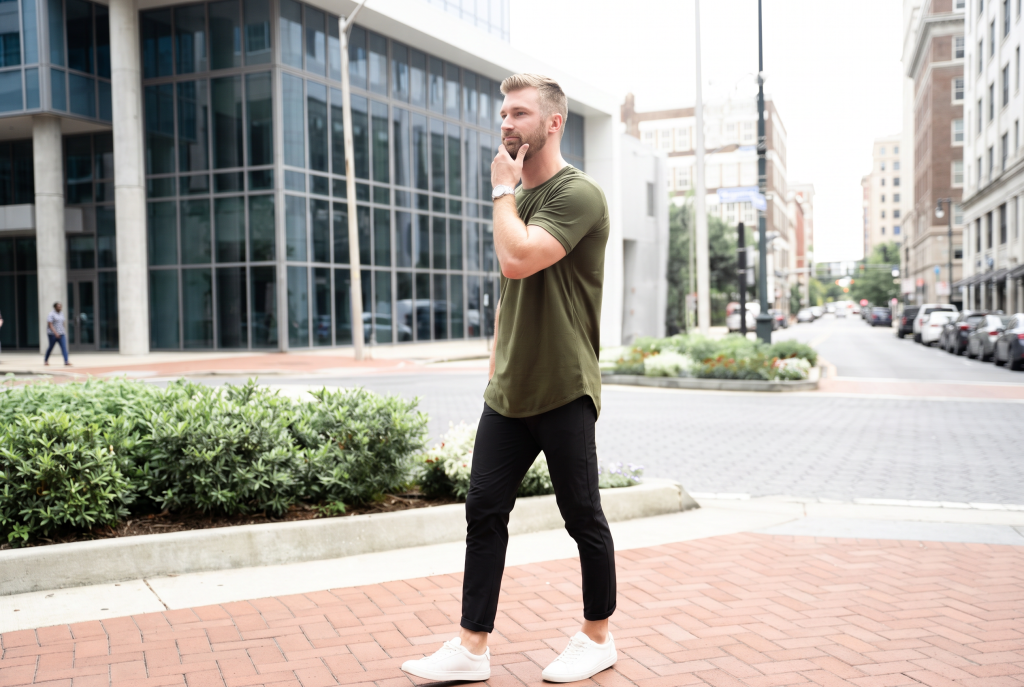
You still get some extra front and back coverage, but the sides rise enough that your proportions don’t feel swallowed by the shirt.
That’s especially useful if you’re shorter or if you simply hate overly long tees.
Curved Hems Work Better With Athletic Fits
This is probably where I’m most biased.
I don’t really want oversized streetwear.
I want a fitted shirt that works with my body.
That means:
Broader shoulders.
Defined chest.
Fitted sleeves.
Cleaner waist.
If the shirt is already cut with an athletic silhouette, a curved hem makes sense as the final detail.
It continues the same visual idea.
The shirt is wider up top.
More tapered through the torso.
Then the hem finishes the shape without creating a hard horizontal stop.
That’s why I think athletic fit T-shirts for men and curved hems work so naturally together.
1. Curved Hem Tee — The Everyday Version
If you’re trying this style for the first time, I’d start with the Ten/10 Curved Hem Tee.
This is the everyday option.
It gives you the athletic silhouette, stretch, and curved bottom without making the shirt feel overly dressy or complicated.
That’s important.
I don’t want a T-shirt that looks like it’s trying too hard.
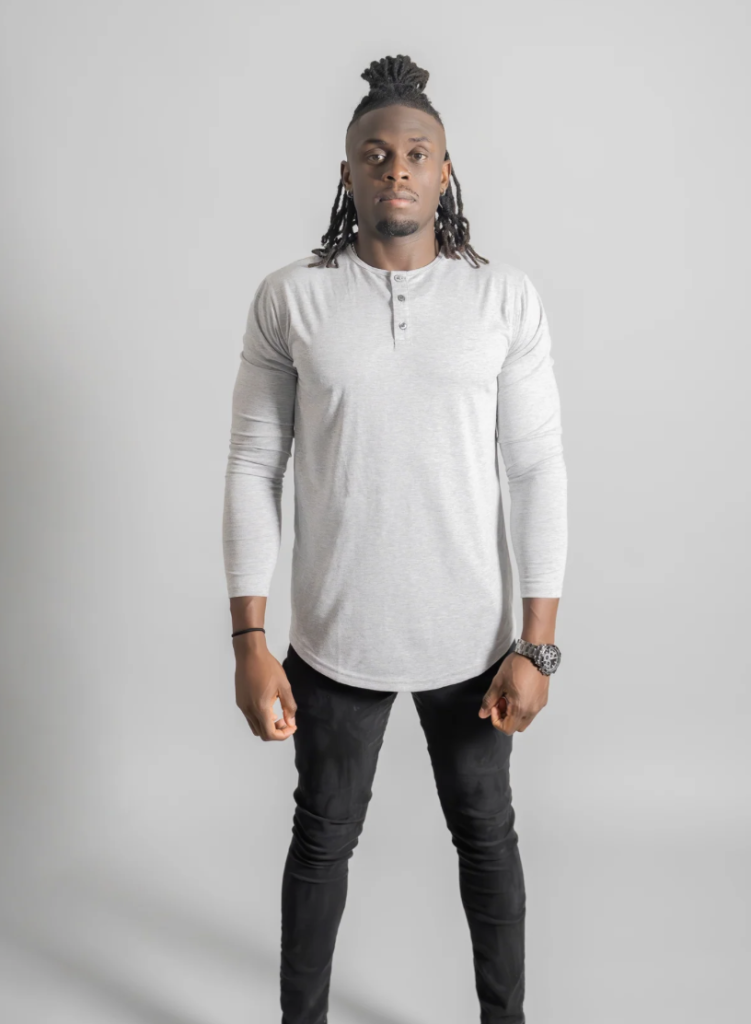
I just want a shirt that fits better than the average tee.
The Curved Hem Tee uses Ten/10’s Velura™ fabric, which blends polyester, cotton, and spandex for softness, movement, and shape retention.
The Hem Isn’t Supposed to Be the Main Event
This is where curved hem shirts can go wrong.
If the scoop is too dramatic, the shirt starts wearing you.
That was more common in the longline streetwear era.
The front and back would drop really low.
The sides would curve aggressively.
Sometimes the shirt ended halfway down the thigh.
That’s not what I’m talking about.
I prefer a subtle curve.
Enough to shape the bottom.
Not enough to turn the hem into a fashion statement.
The best curved hem is usually the one you notice subconsciously.
You don’t think:
“That is an aggressively curved shirt.”
You think:
“That shirt fits really well.”
Curved Hem vs. Straight Hem: Which Looks Better Untucked?
For me, curved hem wins.
Here’s why:
| Straight Hem | Curved Hem |
|---|---|
| Traditional | More contemporary |
| Flat horizontal finish | Rounded finish |
| Can look boxier | Adds more shape |
| Good tucked or untucked | Especially good untucked |
| Works well on relaxed fits | Works especially well on fitted silhouettes |
| Can visually shorten legs if too long | Sides expose more leg line |
That doesn’t mean straight hems are bad.
I still like them on:
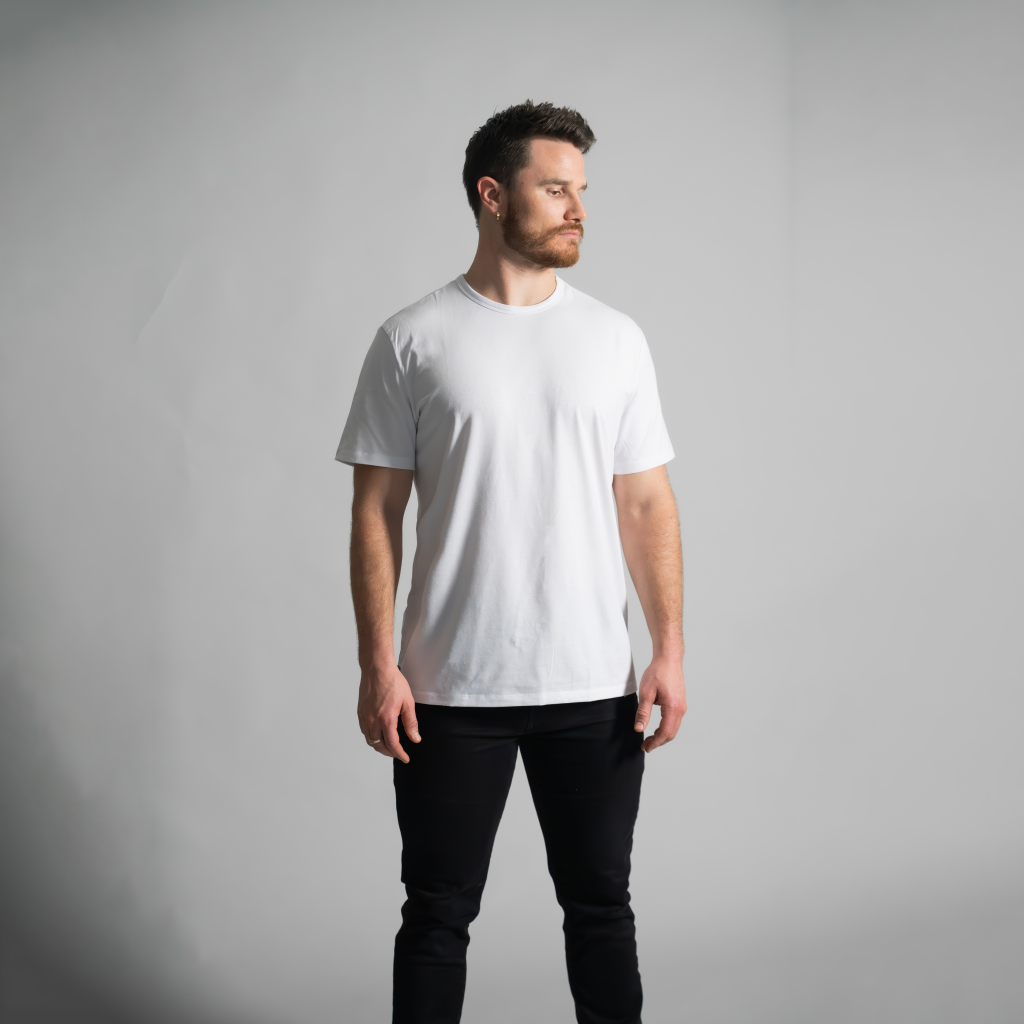
Heavyweight tees.
Relaxed fits.
Vintage-style shirts.
Oversized shirts.
But when I want a clean fitted tee worn untucked, I almost always prefer the curved hem.
2. Heritage Curved Hem Tee — When I Want Better Drape
The Heritage Curved Hem Tee takes the same basic shape and upgrades the fabric.
This matters because a curved hem needs to drape properly.
A stiff material can make the bottom feel rigid.
A softer, more fluid fabric lets the hem fall naturally.
That’s one of the reasons I like the Heritage Aero-Blayde™ blend here.
The rayon, nylon, and spandex combination gives the shirt a smoother, more premium feel with better drape and stretch.
This is the version I’d wear when I want a T-shirt to feel a little more elevated.
Why Curved Hems Can Make the Waist Look Cleaner
A straight hem creates width visually because it runs directly across the body.
If the shirt is loose around the lower torso, that can emphasize the bagginess.
A curved hem creates a softer transition.
But I want to be clear about something:
the hem does not replace taper.
If the shirt is six inches too wide at the waist, changing the bottom shape won’t solve that.
You need the right cut first.
That’s why I think the best result comes from:
athletic fit + taper + curved hem
not curved hem by itself.
If your shirt already fits your chest but hangs loose at the waist, that’s really a cut problem.
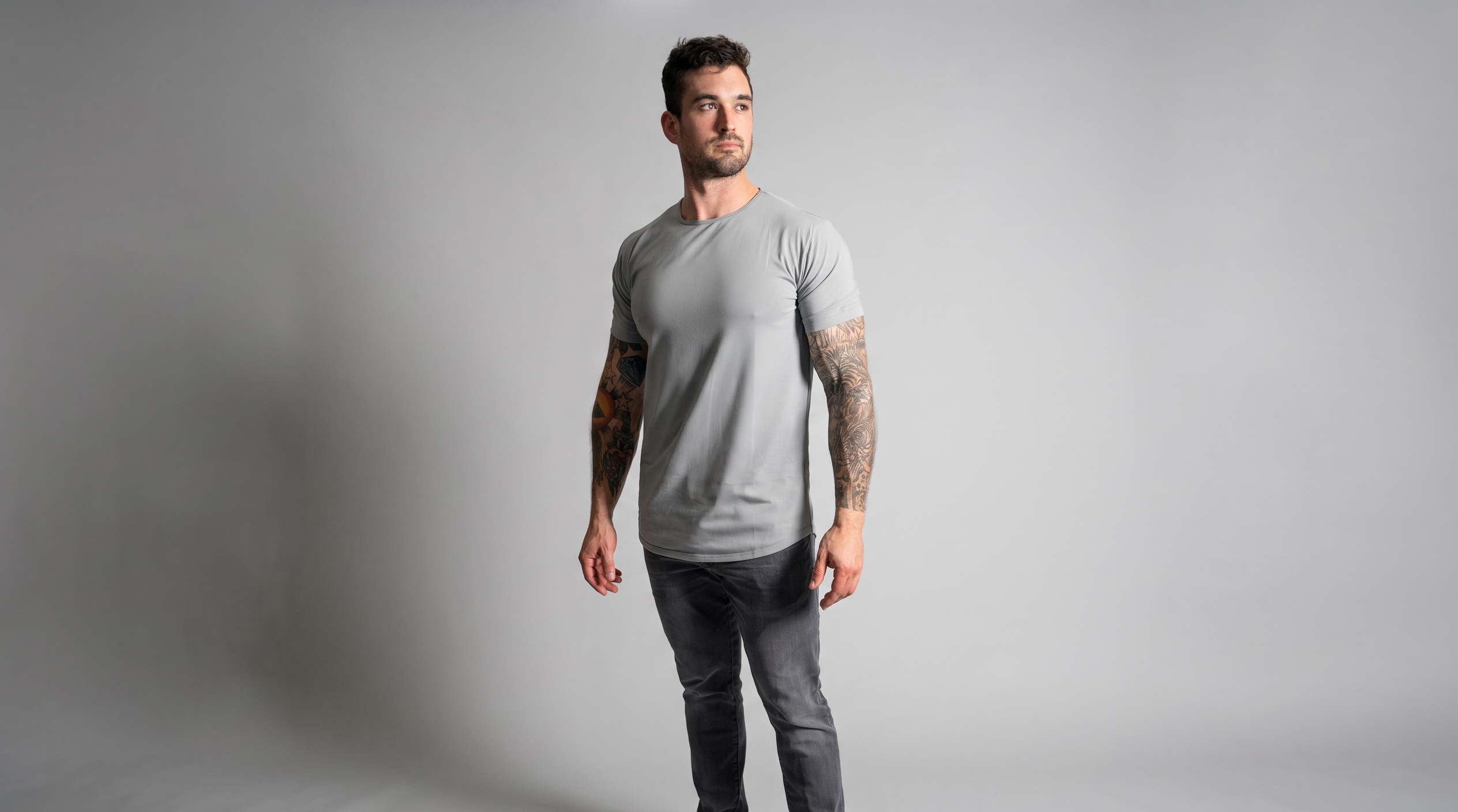
Curved Hems Look Especially Good on Muscular Builds
If you’ve got:
Broad shoulders.
A developed chest.
Bigger arms.
A narrower waist.
Then I think a curved hem works really well.
Why?
Because your body already has a V-shape.
The shirt can follow that shape.
Then the curved hem keeps the lower part of the tee from feeling like a rectangle slapped onto the bottom.
That’s also why curved hems work so well for shirts that don’t look boxy.
You get cleaner proportions without forcing yourself into a skin-tight shirt.
3. V-Neck Curved Hem — Same Bottom, Different Upper Shape
One of the reasons I don’t get tired of curved hem shirts is that the neckline can change.
A V-Neck Curved Hem Tee gives the same rounded bottom but changes the upper-body silhouette.
I like that because it adds variety without changing the overall fit philosophy.
You still get:
Athletic shape.
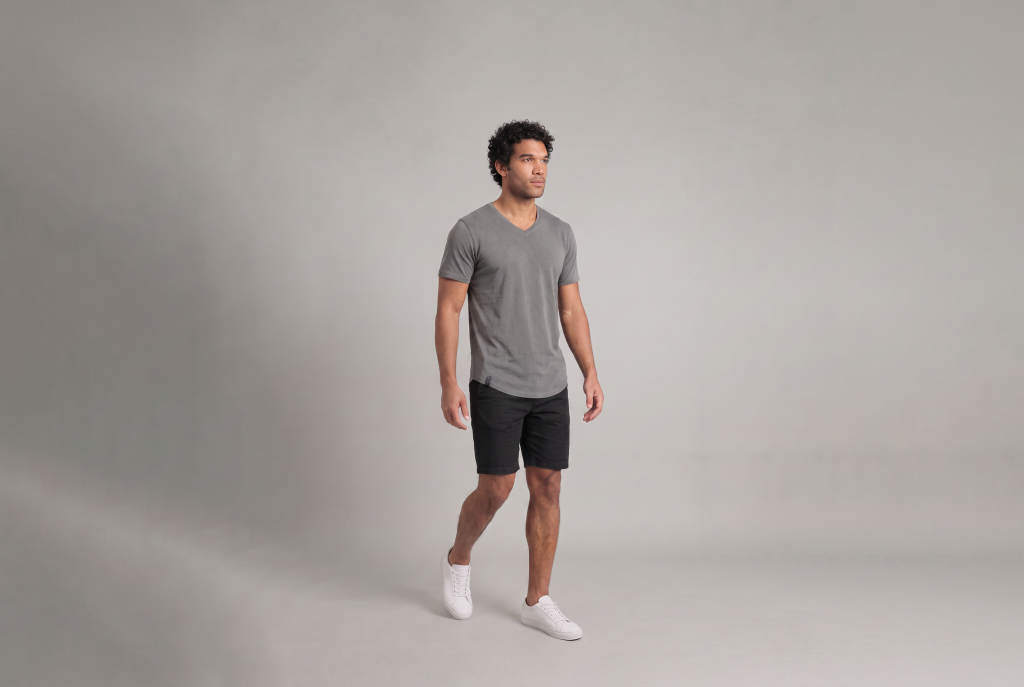
Curved bottom.
Minimal branding.
Cleaner untucked look.
But the neckline feels different.
That’s useful if you already own several crew necks.
Curved Hems Are Better for Layering Too
This is another underrated advantage.
If you wear a curved hem tee under:
A hoodie.
An overshirt.
A jacket.
Or a cardigan.
The bottom can peek out in a more intentional way.
A straight hem hanging below a jacket can sometimes look awkward.
A curved hem creates a more organic layered shape because the front and sides don’t all terminate at one flat line.
This is especially useful during transition weather.
You can keep the T-shirt visible without the outfit feeling sloppy.
4. Long Sleeve Curved Hem — Same Principle, More Coverage
I actually think curved hems make even more sense on long sleeves.
Long-sleeve shirts already have more visual fabric.
If the body is too straight and the hem is flat, the whole thing can look boxy fast.
That’s why I like the Long Sleeve Curved Hem Tee.
You get more coverage without losing the shape.
It works particularly well in that in-between weather when it’s too cold for short sleeves but too warm for a jacket.
The curved hem keeps the shirt feeling modern and intentional even though the overall outfit is still very simple.
How Long Should a Curved Hem T-Shirt Be?
This is where guys can ruin the look.
Too short?
You lose the purpose of the shape.
Too long?
Now you’re back in longline territory.
The front and back should extend enough to create the curve, but the shirt should still remain proportional to your height.
For an untucked shirt, I don’t want it hanging way down the thighs.
I want enough coverage that I can move comfortably without the shirt riding up.
That’s it.
If the hem becomes the first thing you notice, it’s probably too dramatic.
Shorter Guys Can Wear Curved Hems Too
Absolutely.
In fact, I think the raised sides can be helpful.
They expose more of the leg line and prevent the shirt from becoming one long block of fabric.
The key is controlling the overall length.
A subtle curved hem can work really well on shorter men.
An extremely long curved hem can do the opposite and make the legs appear even shorter.
So again:
proportion matters more than the hem itself.
Are Curved Hem T-Shirts Still in Style?
Yes.
I don’t think the modern curved hem really needs to be treated like a trend anymore.

The exaggerated longline version had its moment.
But a subtle curved hem on a premium fitted tee just looks clean.
That’s why I still wear them in even today.
We broke that down more fully in Are Curved Hem T-Shirts Still in Style in today?
The short version:
the exaggerated trend aged. The useful silhouette didn’t.
How Should an Untucked T-Shirt Fit?
This is my checklist.
Shoulders
Seams should sit near the natural shoulder edge.
Chest
Close enough to show shape without pulling.
Sleeves
Lightly fitted around the upper arms.
Waist
Some taper.
Length
Enough coverage without overwhelming your proportions.
Hem
Visible curve, but subtle.
That’s what I want from the best fitting T-shirts for men.
Nothing extreme.
Just clean proportions.
What Pants Work Best With Curved Hem Tees?
I keep this pretty simple.
Curved hem shirts work well with:
- Straight-leg jeans
- Slim or athletic-fit jeans
- Chinos
- Five-pocket pants
- Clean shorts
- Minimal joggers
I don’t think you need ultra-skinny pants anymore.
In fact, I like a fitted upper body with a slightly straighter pant.
That contrast feels more modern.
Style Resources
For broader guidance on T-shirt fit, proportions, and modern casual menswear, GQ Style is a useful reference.
For practical everyday menswear advice, Primer Magazine is another good resource if you care more about wearable fit than runway styling.
Related Articles
- Are Curved Hem T-Shirts Still in Style in 2026?
- Shirts that make your waist look smaller
- Best T-Shirts for Men Who Hate Baggy Shirts
- The 7 Best Shirts for Broad Shoulders
Frequently Asked Questions
Why do curved hem T-shirts look better untucked?
The rounded bottom creates a more intentional finish than a straight horizontal hem. It also exposes more leg at the sides and works especially well with tapered or athletic-fit shirts.
Are curved hem shirts supposed to be worn untucked?
Usually, yes. That’s where the shape is most visible and useful. You can technically tuck one in, but the main visual advantage disappears.
Are curved hem T-shirts good for muscular men?
Yes. I think they work particularly well with athletic builds because the curved bottom complements a tapered torso and broader upper body.
Do curved hem T-shirts make you look taller?
They can influence perceived proportions because the raised sides expose more of the leg line than an excessively long straight hem. Overall shirt length still matters.
Are curved hem shirts good for short men?
Yes, as long as the overall shirt isn’t too long. A subtle curve can work well, while an exaggerated longline hem can make the legs appear shorter.
What’s the difference between a curved hem and scallop hem?
The terms are often used interchangeably. Some brands use “scallop hem” for a more dramatic rounded shape, while “curved hem” can describe a subtler version.
Is a curved hem better than a straight hem?
Neither is universally better. Straight hems work well for classic, relaxed, and heavyweight tees. Curved hems are especially useful if you prefer fitted, untucked, athletic-style shirts.
Final Thoughts: It Just Looks More Finished
That’s really the simplest way I can explain it.
A regular straight hem isn’t wrong.
But when I’m wearing a fitted T-shirt untucked, the curved hem just looks more finished to me.
It adds shape.
It avoids that hard horizontal cutoff.
It exposes a little more leg at the sides.
And when the rest of the shirt already fits correctly, it completes the silhouette instead of fighting it.
That’s why I keep going back to the Ten/10 Curved Hem Tee for everyday wear and the Heritage Curved Hem Teewhen I want the more premium version.
For me, the curved hem isn’t really about chasing a trend.
It’s about making an untucked T-shirt look like it was actually designed to be worn that way.
How Tight Should a Curved Hem Men’s Shirt Be?
Best T-Shirts for Guys With a V-Shaped Body