How Tight Should a Curved Hem Men’s Shirt Be?
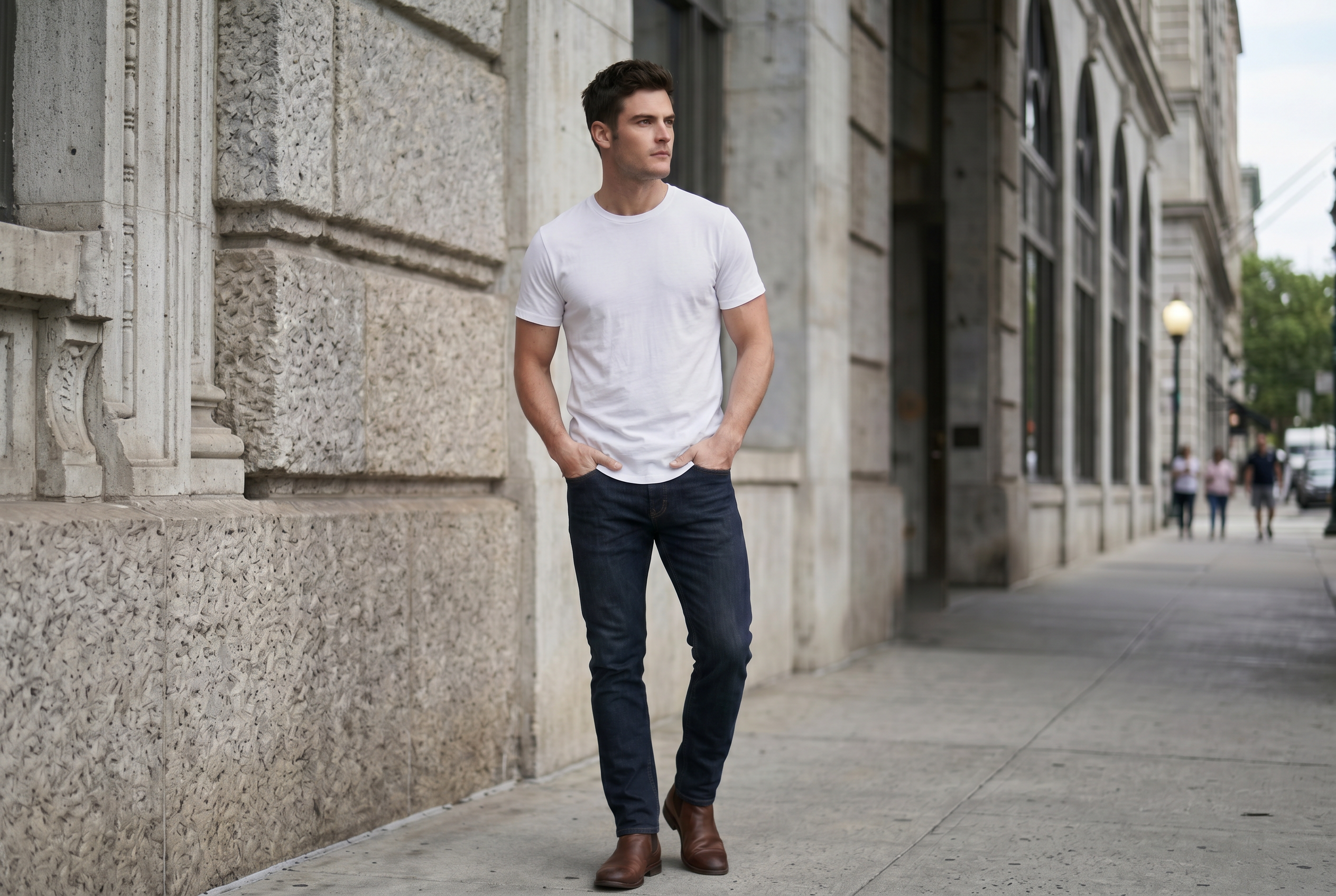
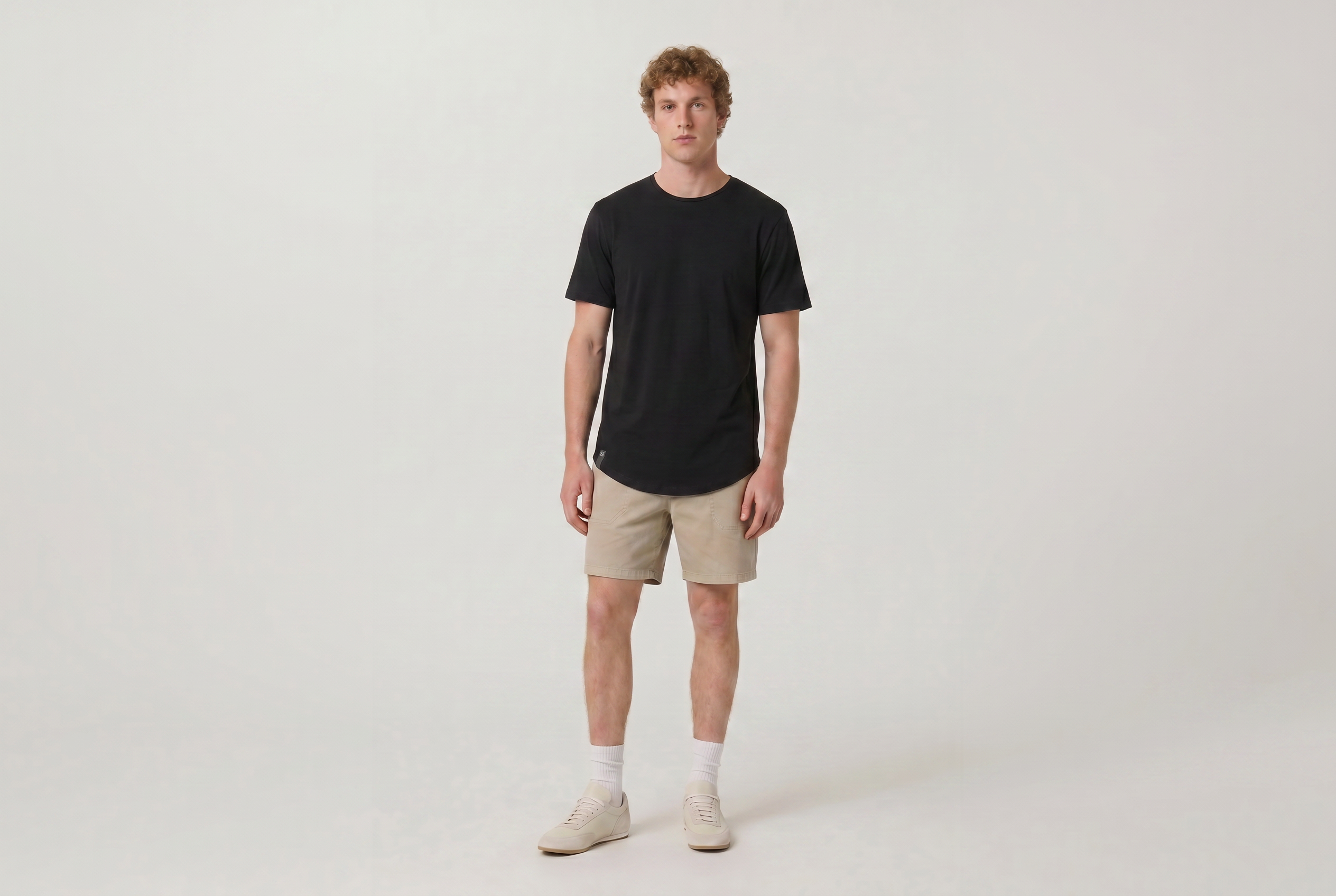
A men's curved hem shirt should fit close enough to show the shape of your shoulders, chest and arms without visibly pulling or clinging to your stomach. You should have enough room to move comfortably, while the torso falls cleanly toward the waist. The curved hem should add shape and length to the bottom of the shirt—not compensate for a shirt that's too small.
One mistake I used to make with fitted T-shirts was assuming that tighter automatically meant better.
If a shirt looked baggy around my waist, I'd size down.
The waist would look better.
But now my chest was pulling.
The sleeves were digging into my arms.
And every time I raised my hands, the entire shirt came with them.

That's when I realized I wasn't actually looking for a tighter T-shirt.
I was looking for a better cut.
That's particularly important with a curved hem shirt.
A curved hem already creates a more shaped silhouette than a traditional straight-bottom T-shirt. When you combine that with an athletic fit, you shouldn't need to squeeze yourself into a shirt one size too small just to show your physique.
Here's how I think a curved hem men's shirt should actually fit.
A Curved Hem Shirt Should Be Fitted, Not Skin-Tight
This is the distinction that matters most.
When I say I want a fitted curved hem shirt, I want the shirt to follow my body's general shape.
I don't want it plastered against me.
There's a pretty simple visual difference.
| Area | Too Tight | Good Fit | Too Loose |
|---|---|---|---|
| Shoulders | Seams pull inward | Seams sit near shoulder edge | Seams droop down arms |
| Chest | Fabric stretches/pulls | Chest has visible shape | Excess fabric hangs |
| Arms | Sleeve squeezes biceps | Sleeve follows arm | Sleeve flares outward |
| Waist | Clings to stomach | Clean natural taper | Fabric balloons |
| Hem | Rides up constantly | Falls naturally | Excessively long/baggy |
| Movement | Restrictive | Comfortable | Excess fabric moves around |
For me, the middle column is the goal.
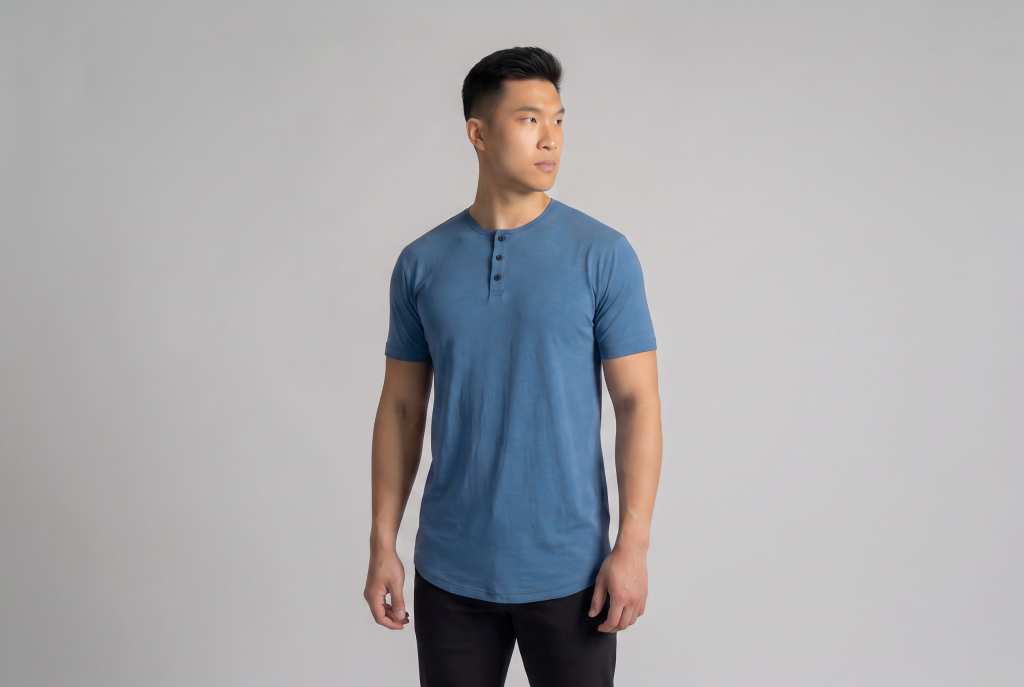
You should be able to tell that you're wearing a fitted shirt.
You shouldn't look like you're wearing compression gear.
Start With the Shoulders, Not the Waist
If I'm trying on a T-shirt, the shoulders are one of the first things I check.
That's because your waist is relatively easy to accommodate through the cut of the garment.
Your shoulders aren't.
Look at where the shoulder seam sits.
Ideally, it should land around the edge of your shoulder rather than noticeably down your upper arm.
If the seam is being pulled inward toward your neck, that's one sign the shirt may be too small through the upper body.
If it's hanging significantly past your shoulder, the shirt may be too large or intentionally oversized.
This matters even more for guys with broad shoulders.
A common mistake is sizing a shirt according to the waist and ending up with something that doesn't have enough room through the shoulders.
That's not a flattering fitted look.
It's just a shirt that's too small.
How Tight Should a Curved Hem Shirt Be Around the Chest?
I want a T-shirt to show the shape of my chest.
But I don't want the fabric stretching across it.
There's a difference.
When you look in the mirror, the shirt should naturally follow the upper torso without producing obvious horizontal tension lines.
If the fabric is being pulled between your chest and armpits, that's a clue that you probably need more room.
Here's another test I use:
Cross your arms in front of your body.
If the shirt suddenly feels extremely restrictive across your chest and upper back, the upper torso may be too tight.
That's particularly important for muscular guys.
If you have a developed chest and back, you don't necessarily need a larger waist.
You need more upper-body room.
That's one of the reasons I prefer an athletic cut.
How Tight Should the Sleeves Be Around Your Arms?
This is where I like a closer fit.
One of the easiest ways to make a T-shirt look more flattering is to eliminate unnecessary sleeve flare.
I don't want the sleeve opening sticking several inches away from my arm.
But there's a point where fitted becomes too tight.
The sleeve shouldn't feel like an elastic band around your biceps.
You also shouldn't have deep indentations in your arms after taking the shirt off.
The way I think about it is:
The sleeve should follow your arm rather than squeeze it.
This works especially well if you have larger arms because the shirt shows their shape without making it look like you deliberately bought a smaller size to show them off.
The Waist Shouldn't Be as Tight as Your Chest
This is probably where I see the most confusion with athletic fit T-shirts.
A tapered shirt doesn't mean the shirt needs to hug your stomach.
I want the torso to become cleaner as it moves down from my chest toward my waist.

But there should still be a small amount of natural drape.
If I can clearly see my belly button through the shirt, that's probably tighter than I want for an everyday T-shirt.
If I can grab a huge handful of fabric on both sides of my waist, I'm probably dealing with the opposite problem.
The sweet spot is somewhere in between.
This is also where the actual pattern of the shirt matters more than simply sizing down.
If a large fits your shoulders but is too wide around your waist, switching to a medium shrinks everything.
Now you're reducing:
Shoulder width.
Chest room.
Armholes.
Sleeves.
Length.
And waist.
But maybe the waist was the only problem.
A tapered or athletic cut addresses the actual proportion instead.
This Is Why Curved Hem Shirts Work So Well With an Athletic Fit
The hem changes how the bottom of the shirt looks.
Instead of ending in one straight horizontal line, a curved hem creates a more shaped bottom edge.
The sides typically sit higher while the front and back extend lower.
That does two things I like.
First, it gives the shirt more visual structure when worn untucked.
Second, it creates a longer vertical line through the torso.
That's particularly useful with an athletic silhouette because the shirt can follow the upper body and then finish with a hem that looks intentionally designed to be worn untucked.
The Ten/10 Heritage Curved Hem Tee is a good example of the fit I'm talking about.
The objective isn't to make the shirt excessively tight.
It's to create a cleaner shape through the upper body and torso while allowing the curved hem to finish the silhouette.
Don't Size Down Just to Make the Curved Hem Look Better
This is worth emphasizing because I've done it.
If the bottom of a curved hem shirt looks too wide, sizing down seems like the obvious solution.
Sometimes it works.
But often you're solving the wrong problem.
The issue might be that the shirt simply has a boxier body than your proportions require.
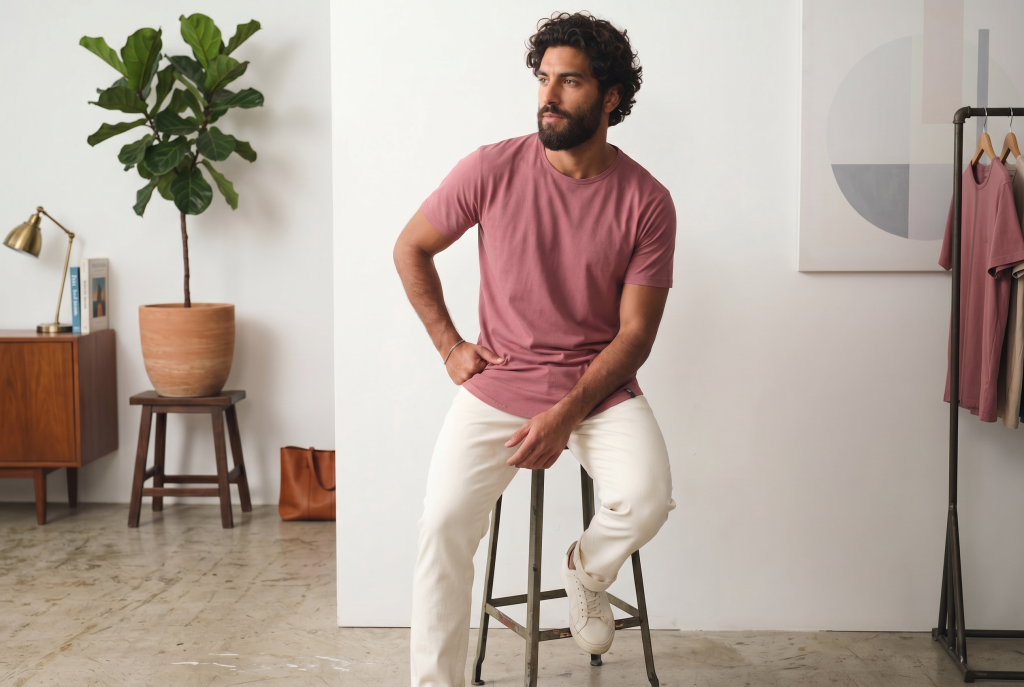
Sizing down can create:
Pulling across your chest.
Restricted shoulders.
Sleeves that are too tight.
Armholes that dig into you.
A hem that sits too high.
A shirt that rides up.
Instead, look for a curved hem shirt designed around a more athletic or tapered silhouette.
That's exactly the kind of problem the Ten/10 Curved Hem Tee is intended to solve.
How Much Fabric Should You Be Able to Pinch?
I wouldn't treat this as an exact measurement because bodies, fabrics and shirt constructions vary.
But the pinch test can still be useful.
Grab a little fabric around the side of your stomach.
There should be some material available.
If you can barely separate the fabric from your skin, the shirt is probably very tight.
If you can pull out a huge handful of fabric, you're probably getting more volume than you need for a fitted look.
What I'm looking for is a little breathing room without obvious excess material.
Don't obsess over a specific number of inches.
Look at how the entire shirt hangs.
Stretch Changes How Tight a Shirt Can Comfortably Fit
Fabric makes a huge difference here.
Two shirts can have nearly identical measurements and feel completely different.
A rigid fabric requires more physical room to allow movement.
A fabric with stretch can sit closer to your body while still letting your shoulders, chest and arms move comfortably.
That's one reason performance blends work so well for athletic-fit clothing.
Ten/10's Heritage Curved Hem Tee uses the Aero-Blayde™ fabric blend we've developed around softness, stretch and movement.
That means the shirt can maintain a relatively clean silhouette without needing to feel rigid.
But stretch shouldn't be used as an excuse to wear a shirt that's obviously too small.
Just because the material can stretch another few inches doesn't mean it should spend the entire day doing it.
Your Shirt Should Pass the Raise-Your-Arms Test
This might be my favorite practical test.
Put the curved hem shirt on.
Stand naturally.
Then raise both arms over your head.
Bring them back down.
What happened?
Some movement is completely normal.
But if the entire shirt rides dramatically upward and stays bunched around your stomach or chest, the fit may be too restrictive.
You can also reach forward like you're grabbing a steering wheel.
Then cross your arms.
Then rotate your shoulders.
You shouldn't have to stand perfectly still for your T-shirt to look good.
A properly fitted shirt should work while you're actually living in it.
How Long Should a Curved Hem Shirt Be?
Tightness is only half of the equation.
Length matters too.
Because the front and back of a curved hem extend lower than the sides, comparing it directly with a straight-hem T-shirt can be misleading.
I want the shirt long enough that the curved shape is obvious and useful.
But I don't want the bottom hanging halfway down my thighs.
The sides should create a natural transition around the waistband area while the curved front and back provide additional coverage.
Your height, torso length and the exact curvature of the hem all affect where it lands.
The key is proportion.
The hem should look like an intentional design feature, not like an oversized T-shirt that happens to be rounded at the bottom.
Should Muscular Men Wear Curved Hem Shirts Tighter?
I don't think so.
Muscular guys can usually get more visual benefit from better proportions than from tighter clothing.
If you've got broad shoulders, a developed chest, bigger arms and a smaller waist, your physique is already creating the shape.
The shirt just needs to follow it.
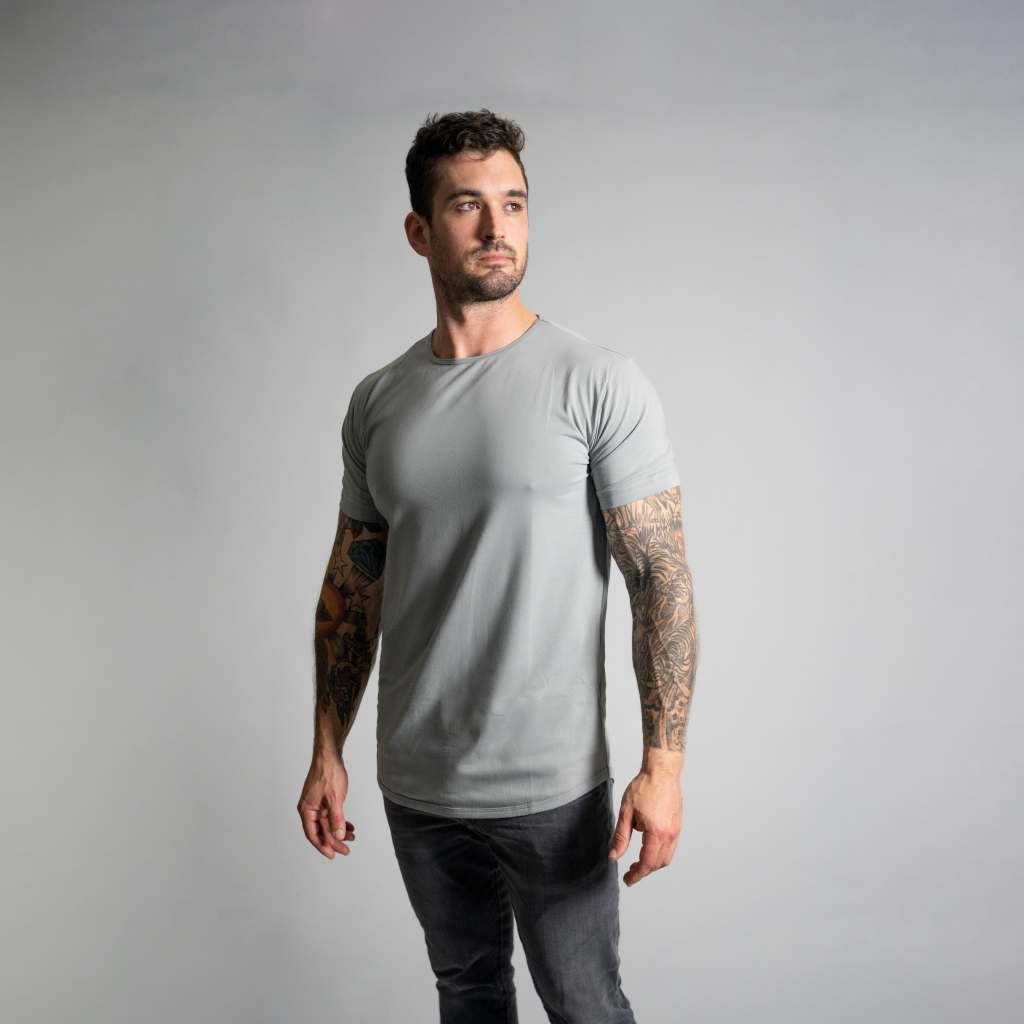
Going excessively tight can actually hide the effect you're trying to create because the entire garment becomes one stretched surface.
I'd rather have:
Room through the shoulders.
A chest that follows the body.
Sleeves that frame the arms.
A cleaner waist.
A curved hem that creates a longer line.
That's why we've previously talked about the difference between simply putting on a smaller shirt and finding clothing actually designed for an athletic build.
What If You Have a Stomach?
This is another situation where tighter isn't necessarily better.
If you're carrying more weight through your midsection, you don't need to hide inside an oversized shirt.
But you probably don't want a curved hem tee clinging tightly to your stomach either.
I would prioritize:
A good shoulder fit.
Enough chest room.
A torso that falls cleanly.
Some space around the stomach.
And enough length for the curved hem to do its job.
A curved hem can be particularly useful here because the shape of the bottom creates a more intentional vertical silhouette than a wide straight line across the waist.
The important thing is allowing the fabric to drape rather than cling.
Can a Curved Hem Shirt Be Too Loose?
Absolutely.
Curved hems don't automatically make every T-shirt flattering.
If the shirt is extremely wide through the body, the curved bottom isn't going to magically create an athletic silhouette.
You'll still have excess fabric.
This is why fit has to be considered as a complete system:
Shoulders + chest + sleeves + torso + length + hem.
You can't fix five bad measurements with one curved edge.
That's also why I think the best curved hem shirts are designed around the hem from the beginning rather than simply taking a standard boxy T-shirt and rounding off the bottom.
How Can You Tell If Your Curved Hem Shirt Is Too Tight?
There are a few signs I watch for.
The shoulder seams pull inward.
You see horizontal lines across the chest.
The sleeves dig noticeably into your arms.
The fabric clings tightly to your stomach.
The shirt constantly rides upward when you move.
The collar gets pulled out of shape.
You feel restricted when crossing your arms.
One of those by itself doesn't necessarily mean the shirt is wrong.
But if you're checking several boxes, I'd try the next size or a different cut.
How Can You Tell If It's Too Loose?
The opposite signs are just as useful.
Your shoulder seams hang down your arms.
Your sleeves flare away from your biceps.
The torso balloons around your waist.
The curved hem looks excessively long.
The shirt folds heavily around your sides.
And your chest disappears underneath the fabric.
Again, there's nothing wrong with intentionally wearing an oversized T-shirt.
That's a legitimate style.
But if you're trying to achieve a fitted curved hem look, that's probably not what you want.
How I Want My Curved Hem Shirt to Look
I think the easiest way to explain my preferred fit is from top to bottom.
Shoulders: structured.
Chest: fitted.
Arms: close.
Waist: tapered but comfortable.
Stomach: some breathing room.
Hem: long enough to create shape.
That's the formula.
And when those proportions work together, I don't have to keep adjusting my shirt throughout the day.
That's what I want from something I'm wearing for eight or ten hours.
Frequently Asked Questions
How tight should a curved hem men's shirt be?
A curved hem shirt should generally follow your shoulders, chest and arms while leaving enough room around the torso for natural movement and drape. It shouldn't visibly stretch across your chest or cling tightly to your stomach.
Should a curved hem shirt be tight around the arms?
The sleeves can sit relatively close to the upper arms for a fitted look, but they shouldn't squeeze the biceps or restrict movement.
Should a curved hem shirt be tight around the stomach?
I wouldn't recommend it for most everyday fits. A small amount of room allows the fabric to fall naturally and usually creates a cleaner silhouette.
Should I size down in a curved hem T-shirt?
Not simply to make the waist tighter. If your normal size fits your shoulders and chest but is too loose around your waist, an athletic or tapered cut may work better than sizing down.
Are curved hem shirts supposed to be longer?
Curved hem shirts typically have additional length at portions of the front and back compared with the higher sides. The exact amount depends on the design.
Are curved hem shirts good for muscular men?
They can work particularly well for muscular and athletic builds when combined with a cut that provides enough shoulder and chest room while controlling excess fabric around the waist.
Can bigger guys wear curved hem shirts?
Yes. The key is choosing enough room through the torso for the fabric to drape naturally rather than cling to the midsection.
How do I know if my T-shirt is too tight?
Visible pulling lines, restricted shoulder movement, sleeves digging into your arms, excessive stomach cling and constant riding up are all signs worth checking.
Style Resources
For additional men's T-shirt fit and styling guidance, GQ Style covers how different T-shirt proportions and silhouettes affect men's outfits.
The Modest Man is another useful menswear resource for understanding clothing proportions, shirt length and how garments should fit different builds.
Related Articles
- Are Curved Hem T-Shirts Still in Style?
- Drop Cut vs Curved Hem: What's the Difference?
- How Long Should a Men's T-Shirt Be?
Final Thoughts: Don't Confuse Tight With Fitted
This was the biggest thing I had to figure out.
I like fitted shirts.
I work out, so I want my shirts to show some of the shape I've built through my shoulders, chest and arms.
But I don't want my T-shirt looking like it's struggling to contain me.
There's a point where going tighter stops improving the fit.
That's why I've stopped automatically sizing down when a shirt looks baggy around my waist.
Instead, I look for a shirt that's actually shaped for the proportions I want.
That's the idea behind the Ten/10 Heritage Curved Hem Tee and our Curved Hem Tee.
Enough room where I need it.
Less unnecessary fabric where I don't.
And a curved hem that gives the bottom of the shirt a cleaner, more intentional shape.
So if you're wondering how tight a curved hem men's shirt should be, I wouldn't try to make it as tight as possible.
I'd try to make it look like it was cut for your body in the first place.
Best T-Shirts for Guys With a V-Shaped Body
Best Premium Curved Hem Long Sleeve T-Shirts for Men