8 Types of Polo Shirts Every Man Should Know
I used to think a polo was basically just a polo.
Collar.
A few buttons.
Short sleeves.
Done.
Then I started paying attention to how differently they actually wear.
Some polos feel almost like T-shirts.
Some are heavier and more structured.
Some are designed for golf.

Some are meant for business casual.
Some look old-school.
Some look very modern.
And once I understood the different types of polo shirts, it became a lot easier to figure out which ones actually belonged in my closet.
Peter Manning's own polo guide makes a similar point: what most guys picture first is the classic short-sleeve pique polo, but polos now come in multiple fabrics, sleeve lengths, and performance categories.
If you're trying to choose between classic, performance, knit, long sleeve, or more modern polo styles, here's how I think about them now.
The Main Types of Polo Shirts at a Glance
| Polo Type | Best For | Overall Feel |
|---|---|---|
| Pique Polo | Classic everyday wear | Textured and traditional |
| Jersey Polo | Casual comfort | Soft and T-shirt-like |
| Performance Polo | Work, golf, travel | Lightweight and technical |
| Golf Polo | Athletic movement | Stretch-focused |
| Long Sleeve Polo | Cooler weather | Polished and seasonal |
| Knit Polo | Dressier casual style | Refined and textured |
| Rugby Polo | Heritage casualwear | Heavy and sporty |
| Mock Neck Polo | Modern minimalist style | Clean and contemporary |
The biggest difference isn't just appearance.
It's fabric + structure + intended use.
1. Pique Polo: The Classic Polo Most Guys Picture
If someone says "polo shirt," this is probably what you're imagining.
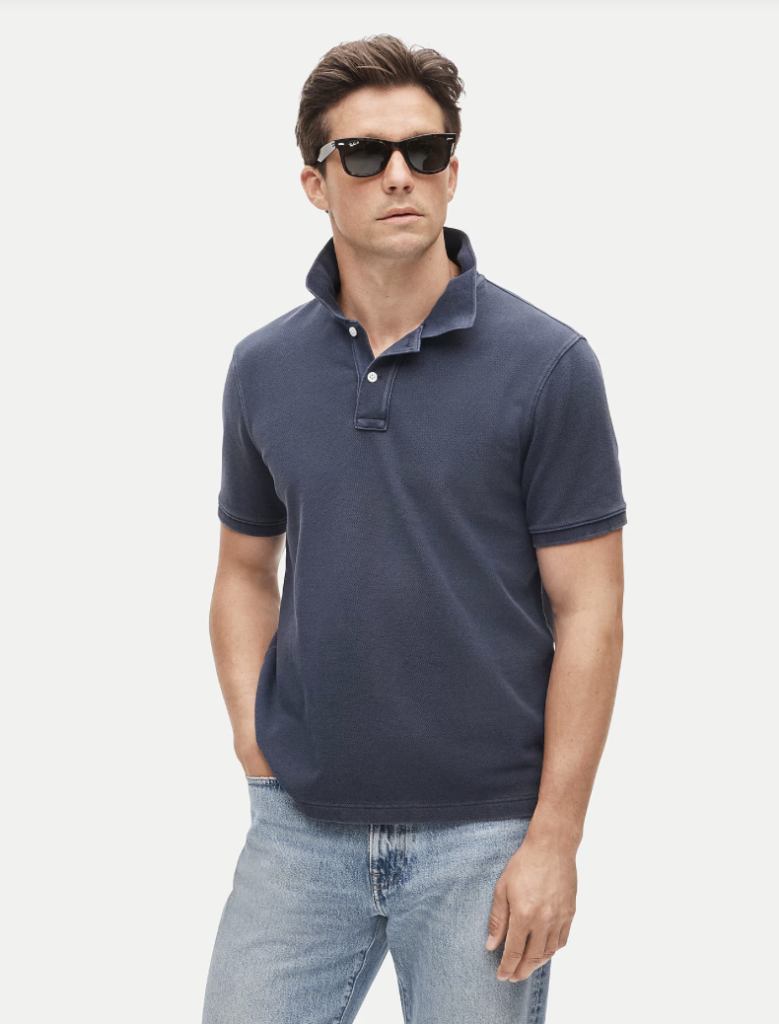
Pique fabric has a textured surface and tends to feel more substantial than a lightweight jersey T-shirt. Peter Manning's guide describes pique polos as heavier than tees or dress shirts, with texture, drape, and some natural stretch.
This is the traditional polo associated with brands like Lacoste and Ralph Lauren.
I think of it as the default polo for:
- Casual Fridays
- Golf clubs
- Weekend wear
- Business casual offices
- Lunch or dinner
The tradeoff is that some pique polos can feel heavier or more rigid, especially in hot weather.
Check out this Pique Polo from J-Crew.
So if you're somewhere warm or you want maximum stretch, I usually prefer a more technical option.
2. Jersey Polo: Basically a T-Shirt With a Collar
Jersey polos are softer and usually lighter than traditional pique polos.
Peter Manning specifically points out that lightweight cotton polos can wear more like a T-shirt than a classic pique polo.
That's exactly how I think about them.
If you love T-shirts but want something slightly more polished, this is one of the easiest transitions.
A jersey polo usually feels:
- Softer
- Lighter
- Less structured
- More casual
- Easier to wear for long periods
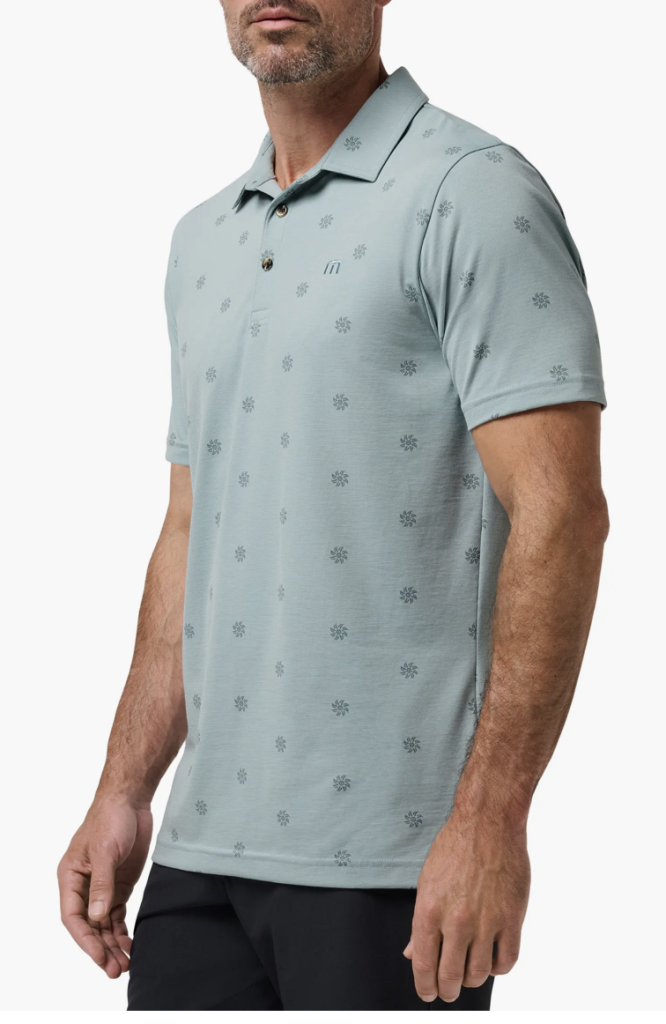
The downside is that jersey fabric may not hold a crisp collar as well as a more structured knit or performance fabric.
So I like jersey polos most for relaxed environments rather than formal business casual.
3. Performance Polo: My Favorite Modern Category
This is the category I wear the most.
A performance polo takes the classic shape of a polo and adds technical fabric characteristics like:
- Four-way stretch
- Moisture management
- Wrinkle resistance
- Breathability
- Lightweight construction
- Better shape retention
This is also where the Ten/10 Stratus Polo fits.

For me, the big advantage is versatility.
I can wear a Stratus Polo to:
Work.
Golf.
Dinner.
Travel.
A client meeting.
A casual event.
And I don't have to change shirts halfway through the day.
That's really what I want from modern clothing.
Our recent guide to the Best Polo Shirts for Men makes the same point: today's best performance polos are lighter, more breathable, and more tailored than the stiff, boxy polos many guys are used to.
4. Golf Polo: A Performance Polo With Sport in Mind
Golf polos overlap heavily with performance polos.
The main difference is the intended use.
Traditional golf polos are specifically built around:

Swing mobility.
Heat.
Moisture.
Sun exposure.
Long periods outside.
Peter Manning's guide notes that golf polos are usually made from performance fabrics with stretch and often include moisture-wicking or temperature-management properties.
That's why I think the best golf polos today are really just highly versatile performance polos.
The Stratus Polo fits that idea well because it gives you enough stretch for movement without looking like a shirt you can only wear on a golf course.
5. Long Sleeve Polo: A Better Option for Cooler Weather
Long sleeve polos are exactly what they sound like:
A traditional polo structure with full-length sleeves.
Peter Manning's article points out that they can also include more structured details like buttoning cuffs or button-down collars, and they're especially useful for fall and winter.
I think long sleeve polos are underrated.
They're useful when:
A short sleeve tee feels too casual.
A sweater feels too warm.
And a button-down feels too formal.
They sit right in the middle.
A good long sleeve polo can work especially well for:
- Business casual offices
- Fall dinners
- Travel
- Date nights
- Cooler golf days
If you already wear short sleeve polos regularly, this is one of the easiest ways to extend that style into cooler weather.
6. Knit Polo: The Dressiest Polo Style
Knit polos have become much more popular in modern menswear.
They're usually softer, more textured, and more refined than a typical golf or performance polo.
You might see them made from:
- Merino wool
- Cotton knit
- Cotton-silk blends
- Fine-gauge synthetics
- Cashmere blends
Peter Manning's guide discusses wool polos as a dressier version of the long sleeve polo, almost like a sweater with a polo collar.
That's a good way to think about the category.
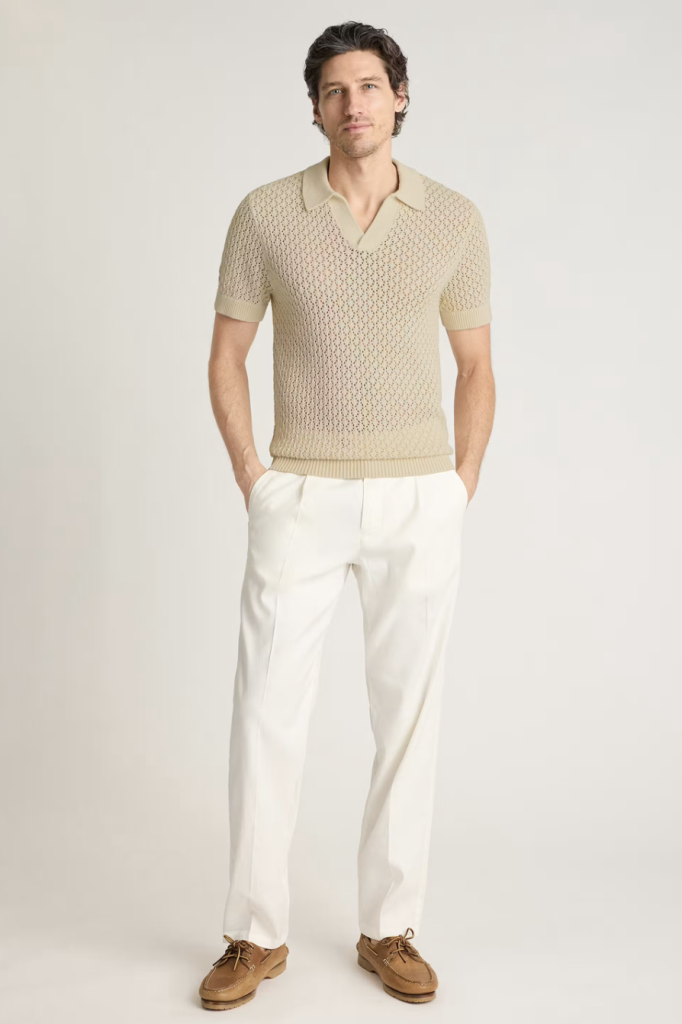
A knit polo makes more sense when you want the polish of a collared shirt without the formality of a dress shirt.
I like these for:
Dinner.
Date night.
Upscale casual offices.
Resort wear.
Layering under a jacket.
7. Rugby Polo: The Heavy Heritage Version
Rugby shirts technically sit inside the broader polo family.
They're usually:
Heavier.
Long sleeved.
Striped.
More durable.
More casual.
And often much more colorful.
Peter Manning describes them as durable long sleeve polos that often use broad horizontal stripes, contrast collars, and cuffs.
They have a completely different feel than a modern performance polo.
This is more heritage sportswear than business casual.
Think:
Heavy cotton.
Bold stripes.
Old-school athletic style.
I wouldn't necessarily wear a rugby shirt to a client meeting.
But for casual fall and winter outfits, they can look great.
8. Mock Neck Polo: The Modern Polo Alternative
This is the category I think is most interesting right now.
A mock neck polo removes the traditional fold-over collar and replaces it with a shorter structured neckline.
You keep the elevated feel of a polo, but the entire shirt looks cleaner and more modern.
That's where the Ten/10 Ares Polo comes in.
The Ares takes a minimalist approach.
No traditional collar.
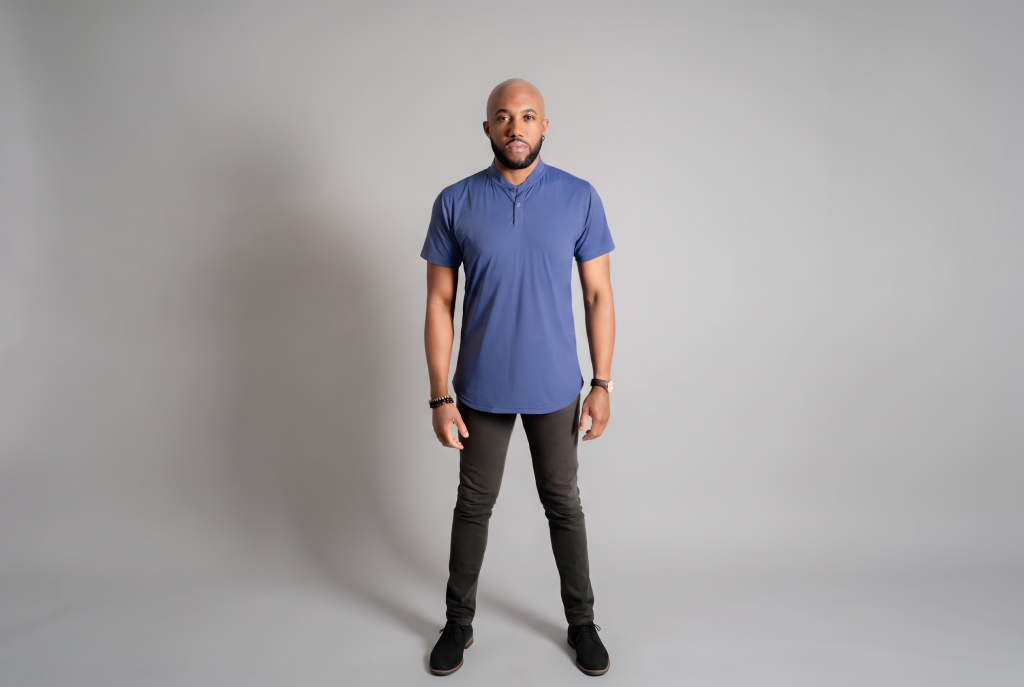
Cleaner neckline.
More contemporary silhouette.
This is the option I'd wear when I already own several traditional polos and want something noticeably different without leaving the polo category entirely.
We compared the two directly in our guide on Mock Neck Polo vs. Regular Polo.
Mock Neck vs. Regular Polo
| Mock Neck Polo | Regular Polo |
|---|---|
| Modern neckline | Classic collar |
| Minimalist | Traditional |
| More fashion-forward | More universal |
| Excellent under jackets | Excellent almost anywhere |
| Great for date nights | Great for work and golf |
I like owning both.
The Ares gives me something more modern.
The Stratus gives me the classic polo shape with modern performance.
What About Athletic-Fit Polos?
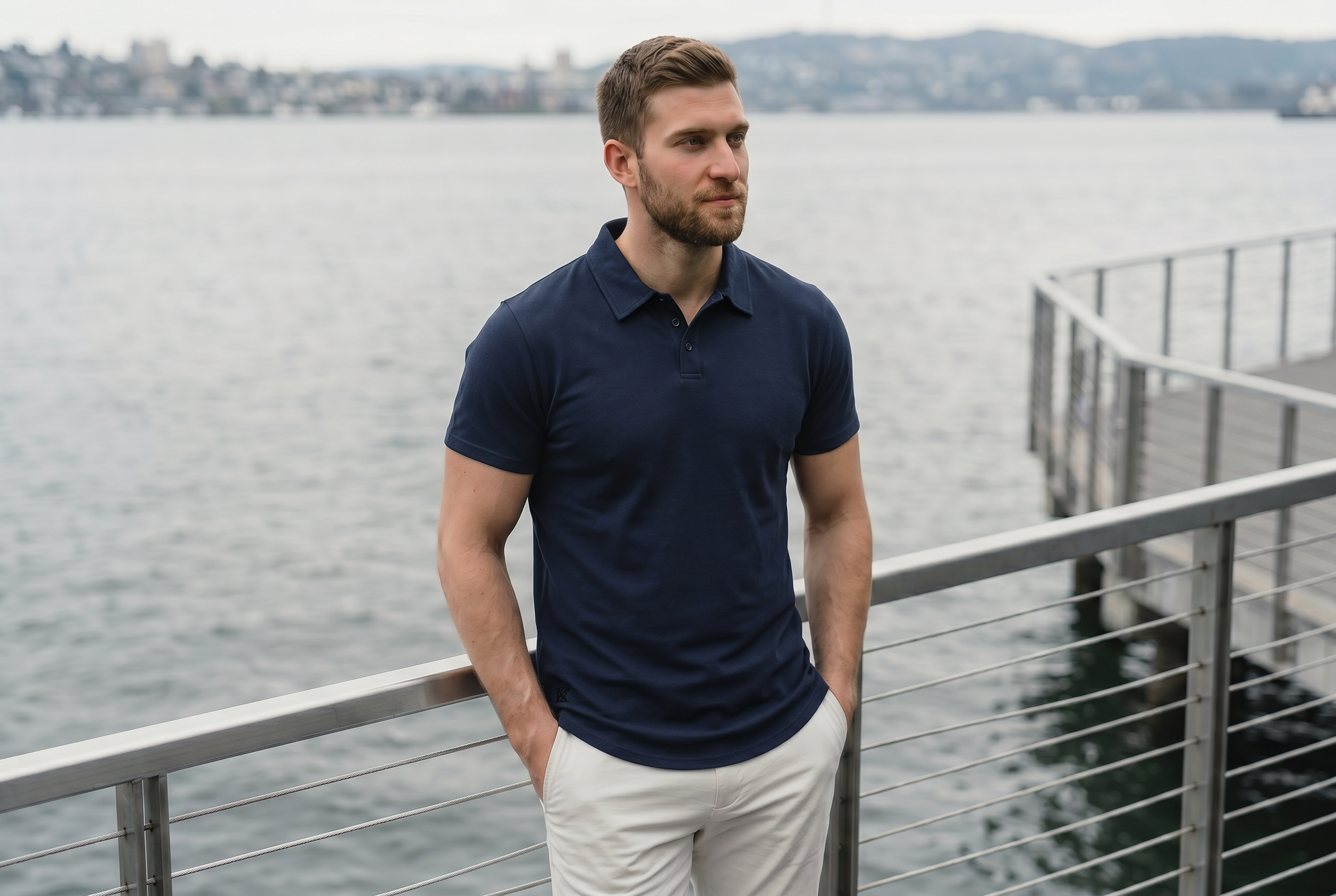
Fit isn't technically its own polo category, but I think it deserves its own section because it changes everything.
A lot of older polos are cut like rectangles.
They fit through the chest and then hang straight down.
That's exactly what I try to avoid.

An athletic fit polo should give you:
- Enough room through the shoulders
- Enough chest space
- Fitted sleeves
- A cleaner waist
- Stretch for movement
Our Best Fitting Polos for Men in 2026 guide goes deeper into why shoulder alignment, torso taper, sleeve length, and overall shirt length matter so much.
That's also why I prefer the Stratus Polo over a traditional boxy fit.
I want the shirt to follow my body without looking tight.
Which Polo Is Best for Business Casual?
For most offices, I'd choose either:
Performance polo
or
classic pique polo
depending on the environment.
Performance polos are especially useful because they offer stretch and wrinkle resistance.
That's one reason we've written separately about Modern Office Polos for Men.
If your office is conservative, a traditional collar is usually the safest bet.
If the office is more modern, the Ares mock neck can give you a cleaner, more contemporary look.
Which Polo Is Best for Golf?
I'd choose performance.
Simple.
A good golf polo needs:
- Stretch
- Breathability
- Moisture management
- Comfortable arm mobility
- A collar that doesn't collapse
Golf is already four or five hours long.

I don't need my shirt becoming another thing I have to think about.
That's why the Stratus works so well here.
Which Polo Is Best for Hot Weather?
I'd avoid heavyweight fabrics.
This is where lightweight jersey or performance polos make the most sense.
Performance fabric gives you the best combination of:
airflow + stretch + moisture management
without forcing you into a baggy shirt.
If I know I'm going to be outside in summer, that's what I'm reaching for.
Which Polo Is Best for a Date?
This depends on the type of date.
For something classic:
Stratus Polo.
For something more modern:
Ares Polo.
I like the Ares especially if I'm going somewhere a little nicer and don't want to look like I'm wearing a golf shirt.
The mock neck gives it a more deliberate, minimalist feel.
What Makes a Polo Look Expensive?
I've found that it usually isn't the logo.
It's the little things.
Fabric
A cheap polo often feels rough, stiff, or shiny.
Collar
The collar should hold its shape.
Fit
No massive waist.
No giant sleeves.
No pulling buttons.
Placket
It should sit flat and clean.
Length
Long enough to tuck if needed, but not so long that it looks ridiculous untucked.
Branding
I personally prefer less.
That's one reason I lean toward premium minimalist polos rather than heavily branded designs.
How Many Polo Types Does a Guy Actually Need?
Not eight.
Unless you really love polos.
If I were building a wardrobe from scratch, I'd start with three.
1. Performance Polo
This covers work, travel, golf, dinner, and everyday wear.
Start with the Stratus.
2. Mock Neck Polo
This gives you something more contemporary.
Add the Ares.
3. Knit or Long Sleeve Polo
This covers cooler weather and dressier situations.
That's enough variety for most guys.
External Style Resources
For another breakdown of polo types, Peter Manning New York's guide covers classic pique, lightweight cotton, long sleeve, wool, golf, and rugby polos. It's a useful overview of how broad the category has become.
Read Peter Manning's Guide to Polo Types
For broader men's style advice and current ways to wear polos, GQ Style is another useful resource.
Related Ten/10 Articles
- Best Polo Shirts for Men
- Best Fitting Polos for Men in 2026
- Modern Office Polos for Men
- Mock Neck Polo vs. Regular Polo
- Best Polo Shirts for Playing Pickleball
Frequently Asked Questions
What are the main types of polo shirts?
The main polo styles include pique polos, jersey polos, performance polos, golf polos, long sleeve polos, knit polos, rugby shirts, and mock neck polos.
What is the most common type of polo?
The classic short sleeve pique polo is probably the most traditional and recognizable polo style.
What's the difference between a pique polo and a performance polo?
Pique polos usually use a textured cotton-based knit and have a more traditional feel. Performance polos typically use technical fabrics designed around stretch, moisture management, and lightweight comfort.
What is a jersey polo?
A jersey polo uses softer, lighter fabric closer to what you'd expect from a T-shirt. It usually feels more casual than a traditional pique polo.
What type of polo is best for golf?
Performance polos are usually the best choice because they prioritize stretch, breathability, and moisture management.
What is a mock neck polo?
A mock neck polo replaces the traditional fold-over collar with a short structured neckline, creating a more minimalist and contemporary appearance.
Are long sleeve polos formal?
They're generally still casual or business casual, but they can feel more polished than a short sleeve polo, especially in finer knits or wool.
Which Ten/10 polo should I choose?
I'd start with the Stratus Polo if you want the most versatile option for work, golf, travel, and everyday wear.
If you already own classic polos and want something more modern, I'd add the Ares mock neck polo.
Final Thoughts: I Stopped Thinking of Polos as One Shirt
That was really the biggest change for me.
I used to hear "polo" and picture one thing.
Now I see an entire spectrum.
You've got traditional pique polos.
Soft jersey polos.
Technical golf shirts.
Long sleeve polos.
Dressier knits.
Heavy rugby shirts.
And modern mock neck polos.
They all technically belong to the same family, but they solve very different problems.
For my own wardrobe, I keep it simple.
I want the Stratus Polo when I need one shirt that can handle work, golf, travel, and dinner.
And I like the Mock Neck Polo when I want something cleaner and more contemporary.
The main thing I'd tell any guy shopping for polos is this:
Don't just ask which polo is best. Ask which type of polo is best for how you actually dress.
That's when the category starts making a lot more sense.

Are Dovetail Bottom Polos Still in Style?
Are Slim Fit Polos Still in Style?