Are Dovetail Bottom Polos Still in Style?
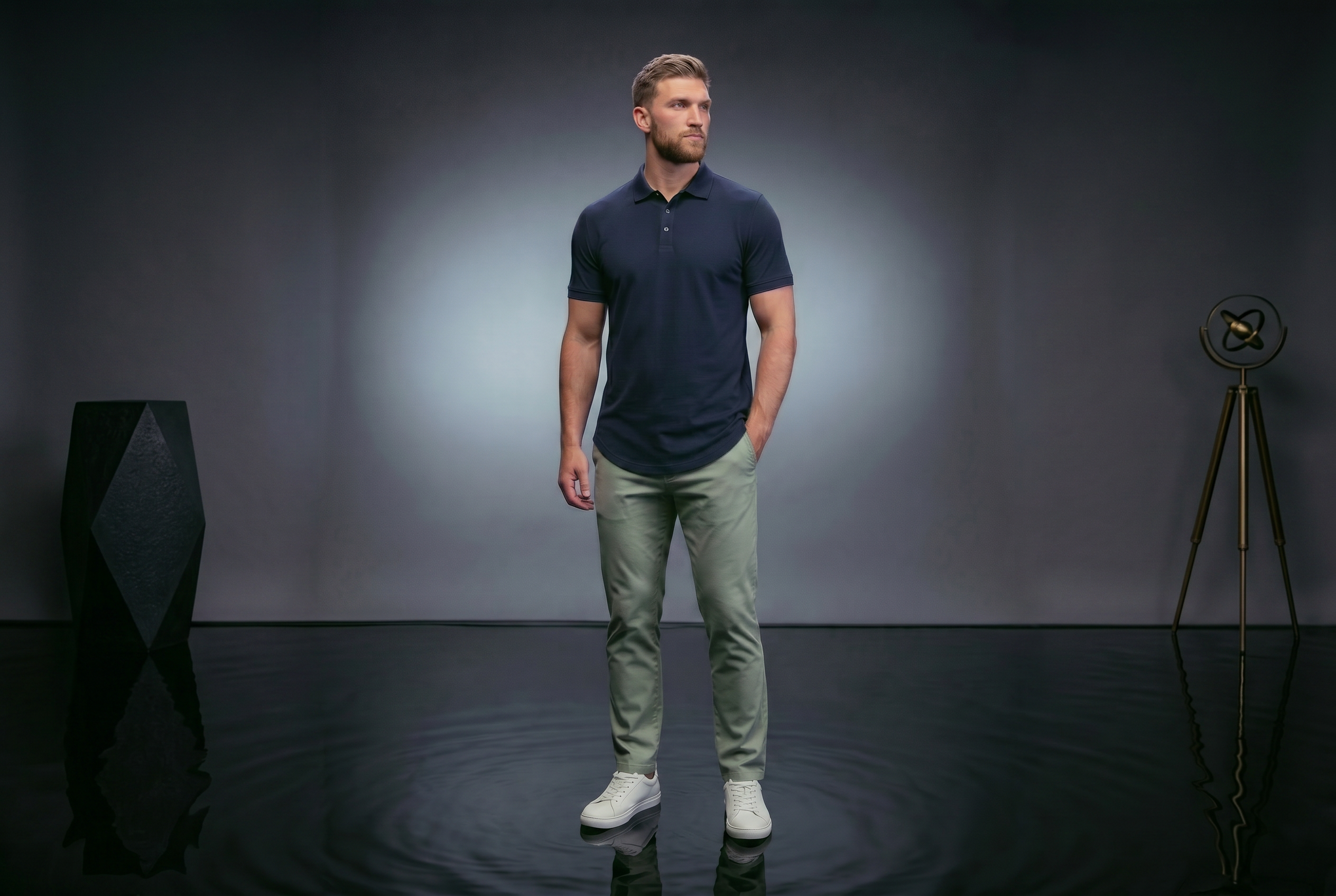
Yes, dovetail bottom polos can still look stylish, especially when the difference between the front and back length is subtle and the polo has a modern fit. The dated version is usually an excessively long, boxy polo designed primarily to stay tucked in. Modern polos can use a slightly longer or shaped back to improve coverage and create a cleaner untucked silhouette.
I used to think the bottom of a polo was one of those details that didn't really matter.
Collar? Obviously.
Sleeves? Definitely.
Fit through the chest? Huge.
But the hem?
I barely thought about it.
Then I started paying more attention to why certain polos looked good untucked while others made me look like I was wearing a company uniform from 2004.
A big part of it was the bottom of the shirt.
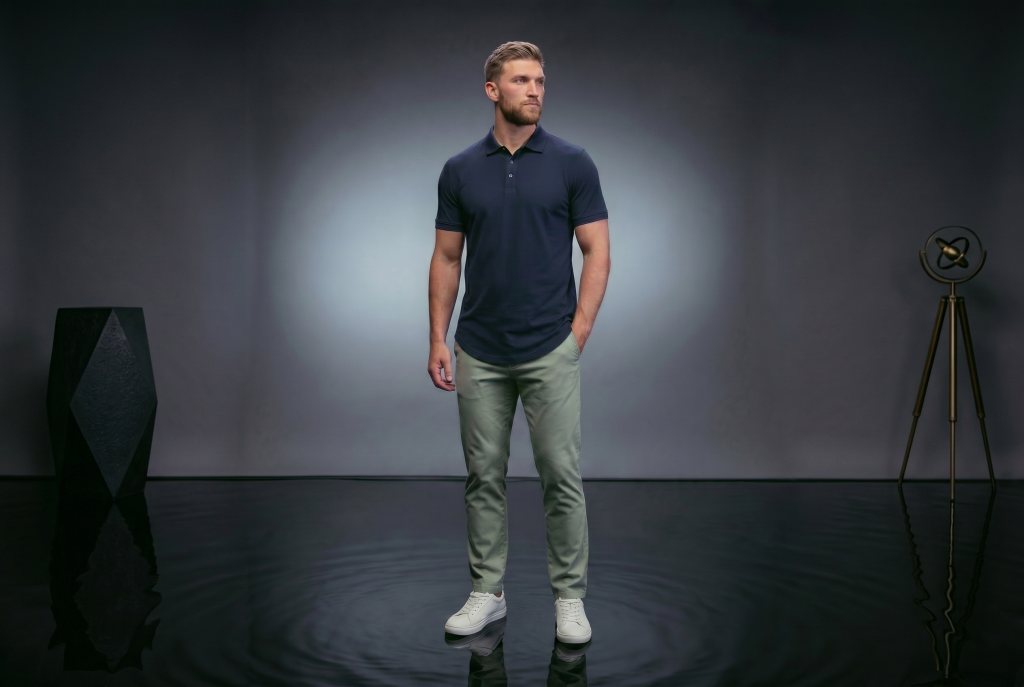
Some polos ended in a straight line.
Some had side vents.
Some were considerably longer in the back.
Others used a more subtle curved or dovetail shape.
That's when I realized something:
The dovetail polo isn't necessarily outdated. The old-school version of it can be.
And there's an important difference.
What Is a Dovetail Bottom Polo?
A dovetail bottom polo generally refers to a polo where the back extends lower than the front.
You may also hear similar designs described as:
Drop-tail polos.
Long-back polos.
Tennis-tail polos.
Or polos with an extended back hem.
The terminology isn't perfectly standardized between brands, but the basic idea is straightforward:
The back of the shirt provides additional length and coverage.
Historically, that made a lot of sense.
Polos originated as active shirts, and extra rear length could help the shirt remain tucked as the wearer moved.
But most guys today aren't necessarily wearing polos the same way.
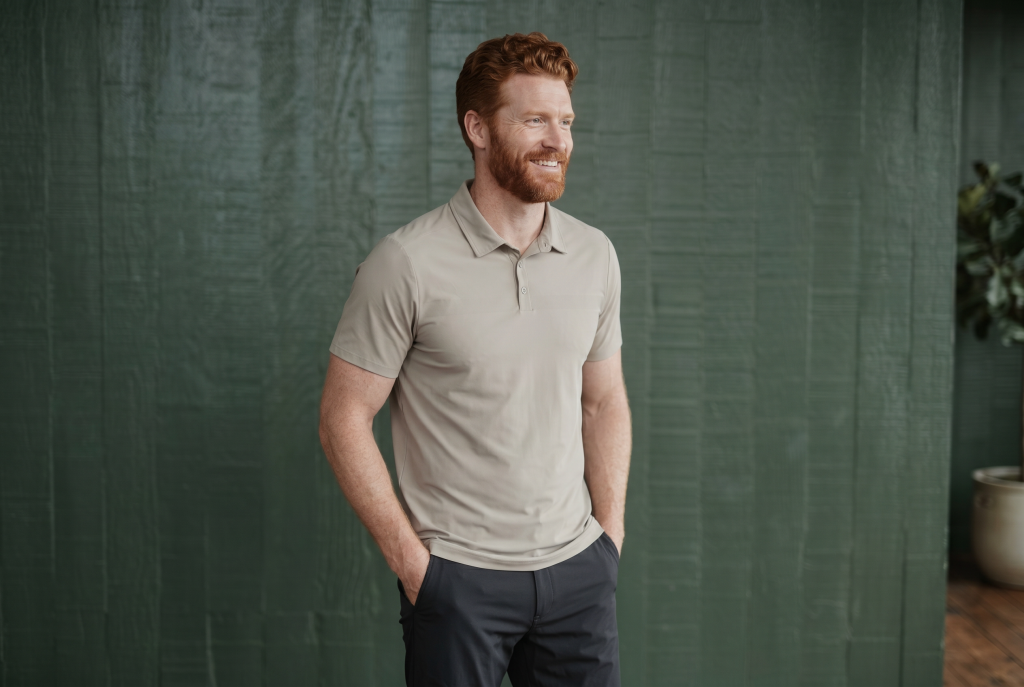
We're wearing them:
Untucked to dinner.
Untucked to work.
Untucked on dates.
Untucked while traveling.
Untucked at bars.
And, yes, sometimes tucked for golf or business casual.
That changes what I want from the hem.
So, Are Dovetail Polos Outdated?
Not automatically.
This is where I think the distinction gets lost.
A dovetail hem is a functional design feature.
It doesn't suddenly become obsolete because men's style changes.
What can look dated is the combination of:
An extremely long back.
A boxy torso.
Large sleeves.
A bulky collar.
Stiff fabric.
And a hem that looks like the shirt was clearly designed to be tucked in.
Put all of that together and, yes, the polo can feel old-fashioned.
But take the same basic concept—a little extra coverage at the back—and integrate it into a cleaner athletic silhouette?
That's a completely different shirt.
Old-School Dovetail vs. Modern Polo Hem
Here's how I think about the difference:
| Traditional Dovetail Polo | Modern Shaped-Hem Polo |
|---|---|
| Back can be noticeably longer | More subtle length difference |
| Often designed for tucking | Designed to work untucked too |
| Boxier body common | Cleaner or athletic torso |
| Traditional heavier fabrics | Lightweight/performance options |
| Larger sleeves common | More fitted sleeves |
| More uniform-like appearance | More lifestyle-oriented |
| Function comes first | Function + silhouette |
The hem itself isn't really the problem.
Proportion is.
Why Were Polo Shirts Longer in the Back?
Function.
Think about what happens when you're moving around in a tucked-in shirt.
You bend.
Sit.
Reach.
Rotate.
Swing a golf club.
The back of the shirt can gradually work its way out of your pants.
Additional rear length helps give the shirt more material to remain tucked.
That's useful.
But if you're wearing the polo untucked, suddenly all of that extra length is visible.
That's where an exaggerated dovetail can become awkward.
From the front, your polo might look perfect.
Then you turn around and the back looks several inches too long.
That's why I prefer a more controlled approach.
The Modern Version Should Be Subtle
This is probably my biggest opinion on dovetail polos.
I don't want the back of my shirt looking like a cape.
A little additional coverage?
Great.
A hem shape that creates some visual interest?
Even better.
But it needs to look intentional.
The difference between the front and back should complement the shirt's proportions rather than dominate them.
That's one reason the modern curved hem polo makes sense to me.
You're getting shape at the bottom without making the shirt look like an old tennis uniform.
Curved Hem vs. Dovetail Polo: What's the Difference?
These terms sometimes overlap in casual descriptions, but I think it's useful to separate the ideas.
A traditional dovetail or drop-tail polo primarily emphasizes additional rear length.
A curved hem emphasizes the shape of the bottom edge itself.
Depending on the design, a modern polo can incorporate characteristics of both.
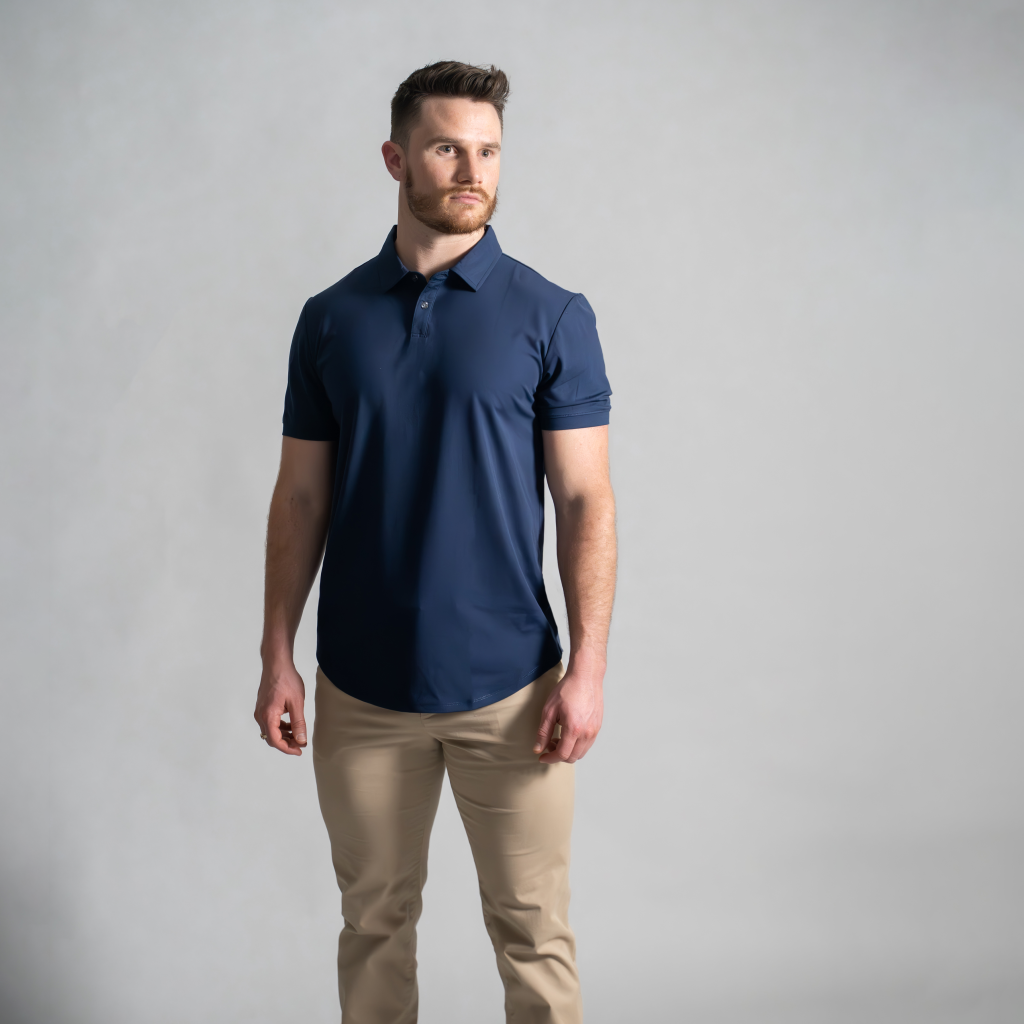
The important question isn't really what terminology the brand uses.
It's:
What does the shirt look like when you're actually wearing it?
If the hem gives me enough coverage, works with my proportions and looks clean untucked, that's what I care about.
Why I Prefer a Curved Polo Hem for Wearing Untucked
I wear polos untucked much more often than tucked.
That's changed what I look for.
With an untucked polo, the hem is always visible.
It's part of the outfit.
A completely straight bottom creates a horizontal line across your body.
A shaped hem can soften that line and create more visual movement.
That's especially useful when the rest of the polo is minimal.
No huge logo.
No crazy print.
No contrast collar.
No oversized branding.
The shape of the garment becomes part of the design.
That's the same reason I've always liked curved hem T-shirts.
And it translates surprisingly well to polos.
The Stratus Polo Takes a More Modern Approach
This is one of the details I like about the Ten/10 Stratus Polo.
Instead of building the polo around the old boxy golf-shirt silhouette, the Stratus uses an athletic form fit with a shaped bottom designed to work with the rest of the shirt.
The current Stratus sizing also illustrates the front-to-back difference.
For example, the size medium is listed at 29 inches front-to-back length and 27.5 inches front-to-front length, creating additional coverage without turning the back into an exaggerated tail.

That proportion increases progressively across sizes while maintaining the same basic difference.
To me, that's the more modern interpretation.
Keep the functional benefit. Clean up the silhouette.
The Stratus also uses a low-profile collar and four-way-stretch Aero-Blayde™ fabric, which is a 50% rayon, 38% nylon and 12% spandex blend.
That matters because the hem isn't operating by itself.
The collar, torso, sleeves, fabric and bottom all contribute to whether a polo feels modern.
A Modern Hem Can't Save a Boxy Polo
This is worth saying.
You could put the most perfectly designed curved hem in the world on a polo, but if the torso is enormous, I'm probably still not going to like the way it looks.
Fit comes first.
For me, a modern polo should have:
Enough room through the shoulders.
Enough room through the chest.
Sleeves that follow the upper arms.
A cleaner waist.
Enough stretch for movement.
A hem designed around wearing the shirt untucked.
That's why I think athletic fit and a shaped hem work particularly well together.
One handles the upper-body proportions.
The other finishes the bottom.
Are Dovetail Polos Good for Muscular Men?
They can be.
But again, I'd focus more on the entire cut than the dovetail itself.
If you have broad shoulders, a developed chest and a relatively narrow waist, a traditional boxy polo can hide a lot of your shape.
Then adding an extremely long rear hem can make the shirt look even larger.
That's not what I want.
I'd rather have an athletic fit polo that gives me enough shoulder and chest room while keeping the torso relatively clean.
Then the extended or curved hem can add coverage without adding visual bulk.
This is particularly useful when you're wearing the polo untucked.
Does a Longer Back Make Your Polo Look Better Untucked?
Sometimes.
There's a point where additional length helps.
And there's a point where it hurts.
If the back of your polo is too short, it can ride upward when you sit, bend or move.
A little additional rear coverage solves that.
But if the back extends excessively low, it can make your legs appear shorter and the polo look oversized.
That's why I wouldn't choose a dovetail polo simply because it has the longest tail.
More length isn't automatically better.
The hem needs to be proportionate to your body.
How Long Should an Untucked Polo Be?
I don't think there's one perfect measurement for every man.
Height matters.
Torso length matters.
Pant rise matters.
The cut of the polo matters.
The depth of the hem matters.
Instead, I look at the visual result.
From the front, I don't want the polo extending so low that it covers a huge portion of my pants.
From the back, I want enough coverage that normal movement doesn't expose my waistband or make the shirt look too short.
Then I move.
I sit.
Raise my arms.
Reach forward.
If the shirt still looks proportionate afterward, that's much more useful to me than obsessing over one universal measurement.
Can You Tuck in a Dovetail Polo?
Absolutely.
In fact, that's one of the original advantages of the longer-back design.
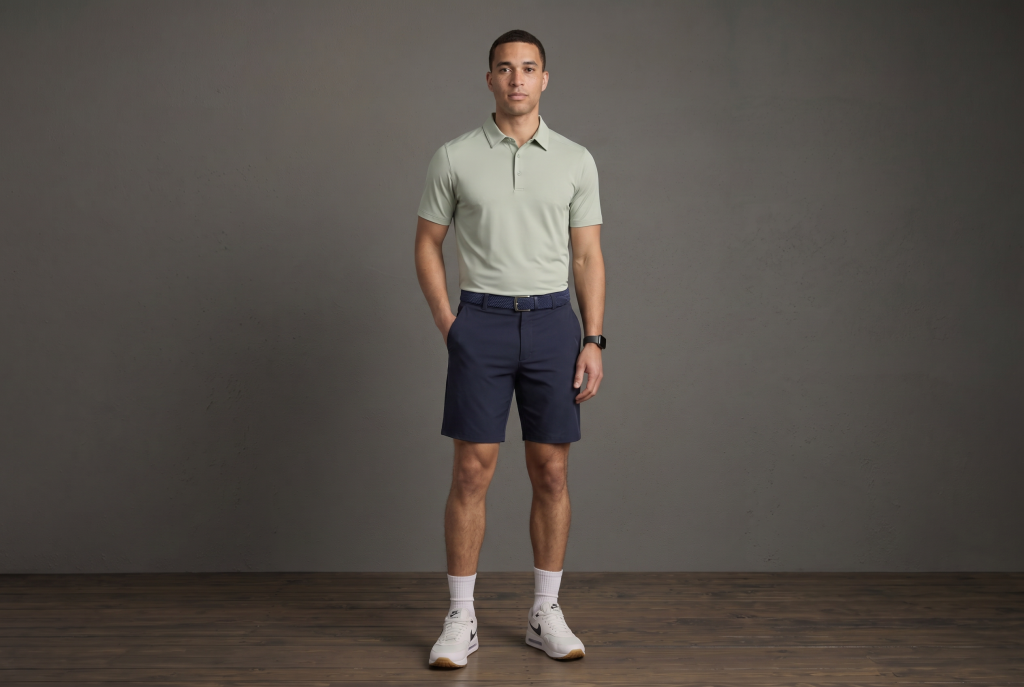
Additional rear length can make it easier for the shirt to remain tucked during movement.
So if you regularly wear polos tucked into chinos or trousers for work, a subtle dovetail can still be useful.
That's why I don't think this design feature is going anywhere.
It works both functionally and aesthetically when executed correctly.
The modern improvement is making sure the shirt also looks good when you don't tuck it in.
Do Dovetail Polos Work for Business Casual?
Yes.
The hem is rarely the deciding factor in whether a polo looks appropriate for business casual.
I'd pay much more attention to:
Fit.
Fabric.
Collar structure.
Color.
Branding.
Condition.
And what you're wearing with it.
A clean black, white, navy or gray performance polo with a subtle extended hem can look considerably more polished than a poorly fitted straight-hem polo.
For work, something like the Stratus Polo works because the athletic silhouette, low-profile collar and minimalist styling keep the overall appearance refined.
The shaped hem simply adds versatility when you want to wear it untucked.
What Makes a Dovetail Polo Look Dated?
If I were trying to avoid the old-school look, these are the things I'd watch:
An Extremely Long Tail
Some additional length is functional.
Too much starts dominating the silhouette.
A Very Boxy Torso
This is probably the bigger problem.
A huge body combined with a long back can make the polo look several sizes too large.
Oversized Sleeves
I prefer polo sleeves that sit relatively close to my upper arms.
Huge sleeve openings can instantly make an otherwise decent polo feel dated.
A Bulky Collar
The collar frames your face and neck.
A cleaner, lower-profile collar can make a major difference in how contemporary the polo feels.
Stiff, Heavy Fabric
There's still a place for traditional cotton polos, but lighter and stretch-oriented fabrics can create a completely different silhouette.
Too Many Details
Huge logos.
Contrast stitching.
Multiple colors.
Oversized plackets.
Then add a dramatic dovetail.
Now there's a lot happening.
For a modern polo, I prefer keeping things simple.
Should You Choose a Straight Hem or Dovetail Hem Polo?
It depends on how you're going to wear it.
| If You Want... | I'd Consider... |
|---|---|
| Very traditional polo appearance | Straight hem |
| Extra rear coverage | Dovetail/drop tail |
| Primarily tucked wear | Dovetail |
| Primarily untucked wear | Subtle curved/dovetail hem |
| Athletic silhouette | Curved hem + athletic fit |
| Minimalist style | Subtle shaped hem |
| Golf functionality | Dovetail or performance curved hem |
| Work-to-dinner versatility | Modern shaped hem |
There's no rule saying every man needs one particular hem.
The important thing is understanding what the design is doing.
Are Straight-Bottom Polos Out of Style?
No.
And I wouldn't frame this as dovetail versus straight hem where one has to win.
Straight hems are classic.
Dovetail hems are functional.
Curved hems create a different silhouette.
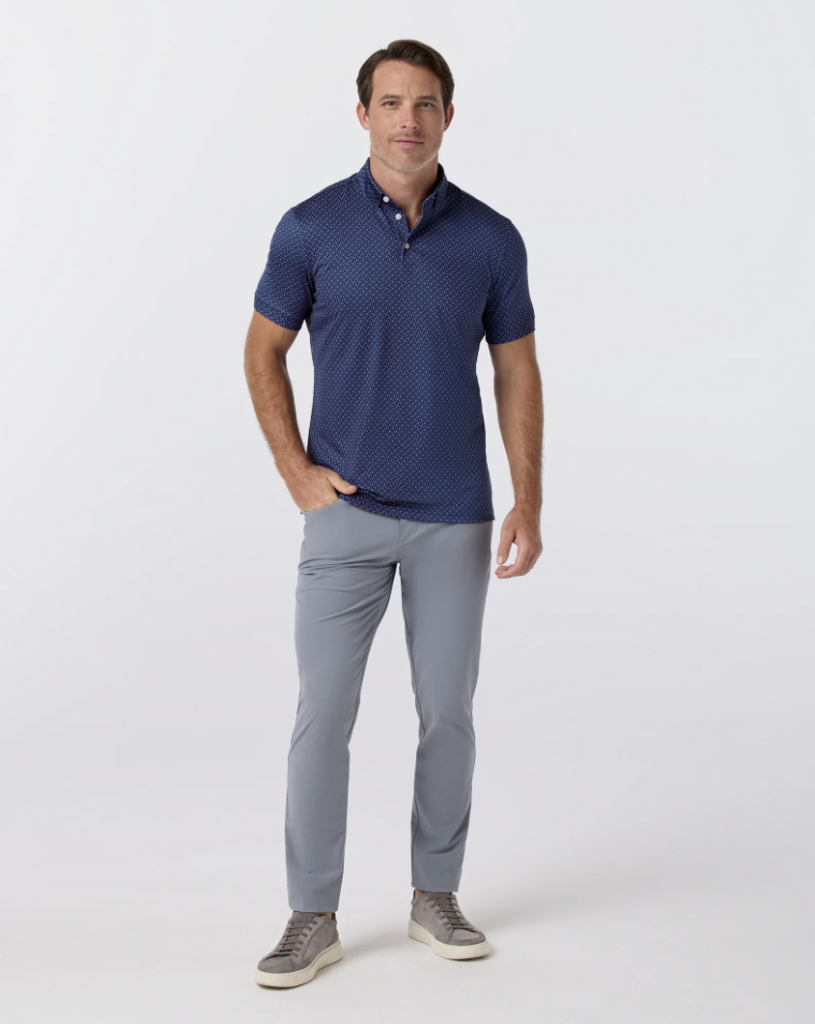
All three can work.
What makes a polo look current is usually the combination of fit, proportions, fabric, collar and styling.
That's an important distinction because menswear trends aren't usually as simple as:
This hem is in. That hem is out.
Are Curved Hem Polos Still in Style?
Yes, and I think they make particular sense as more men wear polos untucked.
When the bottom of the shirt is visible, the hem becomes part of the overall silhouette.
A curved design can make an untucked polo feel more intentional than simply taking a traditional tucked polo and leaving it hanging outside your pants.
That's why the Stratus Polo uses its shaped hem alongside an athletic fit rather than treating the bottom as an afterthought.
The entire garment is supposed to work together.
Is the Dovetail Polo Better for Golf?
There's still a strong functional argument for it.
Golf involves a lot of rotation.
Your torso twists.
Your shoulders turn.
You bend.
You reach.
If you're wearing your polo tucked, extra rear length can help with coverage.
If you're wearing it untucked, you still benefit from some additional movement coverage—but I'd want the difference to remain subtle.
That's why modern performance polos can take the original logic behind the tennis-tail or dovetail design and adapt it to how guys actually dress today.
Frequently Asked Questions
Are dovetail bottom polos still in style?
Yes. A subtle dovetail or extended rear hem can still look modern, particularly when combined with a clean torso, fitted sleeves and contemporary fabric. Extremely long, boxy versions may feel more dated.
What is a dovetail polo shirt?
A dovetail polo generally has additional length at the back compared with the front. Similar designs may also be called drop-tail, tennis-tail or extended-back polos depending on the brand.
Why are some polo shirts longer in the back?
Additional rear length can provide more coverage and help a polo remain tucked during movement. This was especially useful for polos designed around active use.
Is a dovetail polo supposed to be tucked in?
It can be, but it doesn't have to be. Traditional designs were particularly useful for tucked wear, while modern versions can use a subtler rear extension that also looks clean untucked.
Can you wear a dovetail polo untucked?
Yes. For untucked wear, I prefer a relatively subtle difference between the front and back rather than an exaggerated tail.
What's the difference between a curved hem and a dovetail polo?
A dovetail primarily refers to additional rear length, while a curved hem describes the shape of the bottom edge. Some modern polos incorporate aspects of both designs.
Are curved hem polos still in style?
Yes. They work particularly well for modern untucked outfits because the shaped bottom becomes part of the overall silhouette.
Are straight hem polos outdated?
No. Straight hems remain a classic polo design. Fit, fabric, proportions and styling matter more than the hem shape alone.
Are dovetail polos good for muscular men?
They can be, particularly when the polo also has an athletic cut. For muscular builds, I'd prioritize enough chest and shoulder room with a cleaner waist rather than choosing a polo based solely on its hem.
Authority Style Resources
For broader coverage of contemporary menswear and how classic pieces such as polos continue to evolve, GQ Style is a useful resource for current men's style and changing silhouettes.
Primer Magazine also covers practical men's wardrobe fundamentals, fit and ways to update classic casual pieces without chasing every trend.
Related Articles
Final Thoughts: The Dovetail Isn't the Part That Looks Dated
So, are dovetail bottom polos still in style?
Yes.
But I'd pay attention to how the dovetail is executed.
I don't want a polo with an enormous tail hanging halfway down the back of my pants.
I also don't want the old combination of a long hem, boxy torso, oversized sleeves and bulky collar.
That's what can make the shirt feel dated.
What I want is the modern interpretation:
A little extra coverage.
A shaped hem.
A cleaner waist.
Enough chest and shoulder room.
Fitted sleeves.
A modern collar.
And fabric that moves with me.
That's the approach behind the Ten/10 Stratus Polo.
The current design uses an athletic form fit, low-profile collar, four-way stretch and a front-to-back length difference that provides extra coverage without turning the polo into an old-school long-tail shirt.
That's why I wouldn't ask whether the dovetail itself has gone out of style.
I'd ask a different question:
Does the entire polo look like it was designed for the way men wear polos today?
If the answer is yes, the dovetail still has a place.

Are Slim Fit Polos Still in Style?
Where Can I Find Polos That Taper at the Waist?